RPM equals SFM times 3.82, divided by the diameter of the stock in inches; run that with the real diameter through the RPM calculator instead of guessing a spindle speed. Chip color and finish quality confirm whether the resulting speed is actually right for the material.

XMHF Lathe HSS Square Cutting Tool Bits Bar Rectangular Lathe Fly...
Check price on Amazon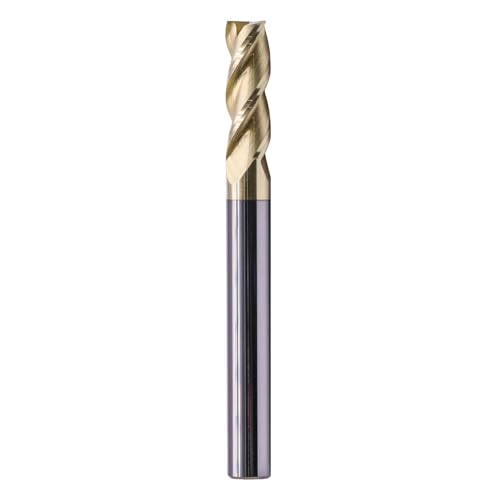
BestParts 1/4" 3 Flute Solid Carbide End Mill for Aluminum - ZrN Coated
Check price on AmazonWhat does surface feet per minute actually mean?
Surface feet per minute (SFM) is the speed at which the cutting edge moves across the surface of the material, measured in linear feet per minute, not the spindle rotation speed itself. A large diameter part spinning slowly can have the same SFM at its surface as a small diameter part spinning much faster, because SFM depends on both RPM and diameter together.
Every tool and material combination has a workable SFM range from published data, listing details and long-standing shop reference values. Staying inside that range keeps tool life reasonable and avoids the two failure modes of cutting too fast (rapid tool wear, poor finish, heat) or too slow (rubbing instead of cutting, work hardening, wasted time).
What is the formula for converting SFM to spindle RPM?
RPM = (SFM x 3.82) / diameter in inches. The constant 3.82 comes from converting feet per minute of surface travel into revolutions per minute for a given circumference. A 1 inch diameter part cut in aluminum at 300 SFM, for example, works out to roughly (300 x 3.82) / 1 = 1,146 RPM.
Doing this arithmetic by hand for every diameter change is tedious and error prone mid-project. Use the RPM calculator instead, and pair it with the cutting time calculator to estimate how long a given pass will take at the resulting feed rate.
| Material | HSS tool SFM (typical) | Carbide tool SFM (typical) |
|---|---|---|
| 6061 Aluminum | 300-600 | 600-1200 |
| Brass (free machining) | 150-300 | 300-600 |
| 1018 Mild steel | 80-120 | 250-400 |
| 304 Stainless steel | 40-70 | 100-200 |
Why does the same RPM feel wrong for different diameters?
Because SFM, not RPM, is what actually matters at the cutting edge. A small diameter part needs a much higher RPM to hit the same SFM as a large diameter part. This is why facing a large diameter workpiece at a fixed RPM often produces a noticeably worse finish near the center, where the effective diameter (and therefore the SFM) has dropped, than near the outer edge. Some more capable lathes can compensate with constant surface speed control that increases RPM automatically as the tool approaches center; most hobby mini lathes do not, so slowing down manually as the cut approaches center is the practical workaround.
How does tool material change the usable cutting speed?
Carbide tooling generally runs at roughly double the SFM of HSS in the same material, because carbide retains hardness at higher cutting temperatures. That is why carbide-tipped end mills and inserts are common in production shops, while HSS tool bits remain popular in hobby shops for their lower cost, ease of regrinding, and forgiving behavior at the lower speeds and lighter machines typical of home shops. See carbide vs HSS lathe tools for the full comparison.
Carbide is also more brittle than HSS, which matters on a lightweight hobby lathe more than it does on a heavy, rigid production machine. A small amount of chatter or a light interrupted cut that an HSS edge simply dulls slightly under can chip a carbide edge outright, which is one practical reason many hobby shops keep HSS as the default for general turning and reserve carbide for jobs where its higher speed capability is actually needed.
What happens if cutting speed is set too high or too low?
Too fast: tool edges dull rapidly from heat, chips discolor, and finish quality drops as the edge breaks down mid-cut. Too slow: the tool tends to rub rather than shear cleanly, which is especially damaging in stainless steel and other work-hardening alloys, since rubbing hardens the surface the next pass then has to cut through. When in doubt, start near the lower end of the published SFM range for a new material or tool combination and adjust based on chip color and finish.
How does depth of cut and feed rate interact with cutting speed?
Cutting speed, depth of cut and feed rate work together rather than independently, and pushing all three toward their maximums at once is a common way to overload a light hobby machine even when each individual number looks reasonable on paper. A published SFM range typically assumes a moderate depth of cut and feed rate; increasing depth of cut substantially, for a heavier roughing pass, often means backing off cutting speed somewhat to keep the total load on the tool and machine manageable.
On a mini lathe specifically, machine rigidity and motor power are usually the practical limit long before the tool material reaches its own speed limit. A carbide insert rated for 800 SFM in aluminum on a rigid production lathe may still need to run slower on a lightweight hobby machine simply because the machine itself cannot hold the cut cleanly at full published speed and depth together.
Does coolant or cutting fluid change the usable cutting speed?
Yes, meaningfully in some materials. Cutting fluid reduces friction and carries heat away from the cutting edge, which allows a somewhat higher sustainable cutting speed than the same tool running dry, particularly in steel and stainless steel where heat buildup is the main limit on speed. Aluminum and brass are cut dry more often in hobby shops, since they generate less frictional heat and a fine mist or light oil is usually enough rather than a full flood.
Published SFM tables sometimes list both a dry and a flood-coolant figure for the same material and tool combination, with the flood-coolant number noticeably higher. A hobby shop applying fluid by hand or brush rather than a true flood system should treat the dry figure, or something between the two, as the more realistic starting point.
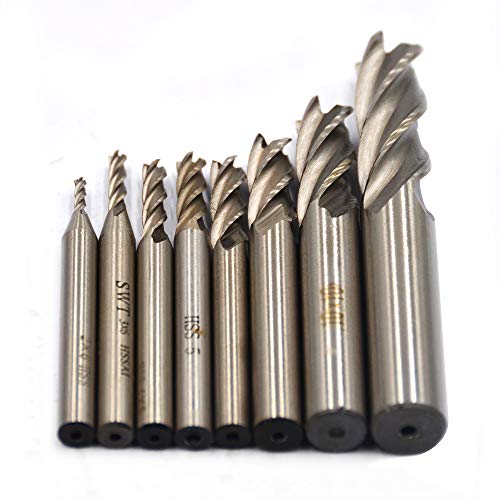
Shop the tools for this
An even spread across the price range, cheapest to premium.


Frequently asked questions
What SFM should I use for aluminum with an HSS tool?
Roughly 300 to 600 SFM is a reasonable starting range for 6061 aluminum with a sharp HSS tool, adjusted based on chip appearance and finish. Free-machining aluminum alloys can often run toward the higher end of that range comfortably.
Why is the RPM formula constant 3.82 instead of a round number?
It comes from the conversion between feet per minute of surface travel and revolutions per minute for a circle, involving pi and the inches-to-feet conversion. The constant simplifies the formula to RPM = SFM times 3.82 divided by diameter in inches, without needing to work through pi and unit conversion each time.
Does a mini lathe motor limit achievable cutting speeds?
Yes, in practice. A mini lathe motor sized around 500 to 650 watts may bog down at the RPM and depth of cut a full published SFM range would suggest for harder materials, so real-world speeds on light hobby machines often sit toward the lower end of the published range.
Should I slow down when facing near the center of a part?
Yes, unless the lathe has constant surface speed control. As the tool approaches center, the effective diameter drops, which drops SFM at a fixed RPM; manually increasing RPM as the cut approaches center keeps the finish more consistent.
Is a chip color change a reliable sign of the wrong cutting speed?
Yes, it is one of the most immediate signals available at the machine. Bright, consistent chips in the expected color for that metal generally indicate reasonable speed and feed; dark, discolored, or blue-tinted chips point to excess heat from too high a speed or too heavy a cut.
Keep going
Researched from published specifications, standards and verified owner reviews. Not professional advice. How we research.