For a first project, 6061 aluminum round bar machines fastest and forgives beginner mistakes; check squareness of stock ends with a machinist square set at $24.69 before cutting to length. Save mild steel for parts that specifically need its strength or threading durability.
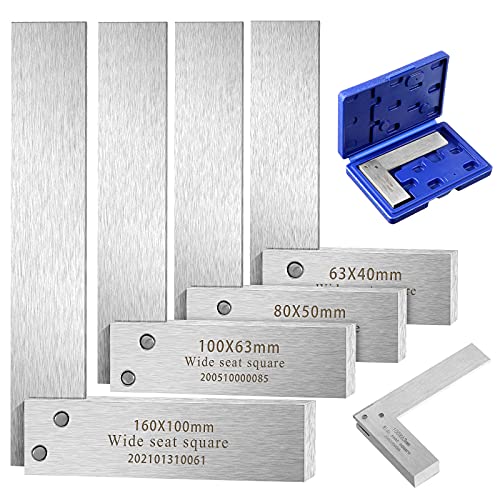
Frienda Machinist Square Set
Check price on Amazon
HARDELL Digital Caliper 6 Inch
Check price on AmazonWhat metal should a beginner start with: aluminum, steel or brass?
6061 aluminum is the most forgiving stock for a beginner. It machines at higher speeds, generates less heat and tool wear than steel, and is widely available in round, square and hex bar sizes. Mild steel (1018) is only modestly harder to machine but holds an edge and threads more predictably than aluminum, which matters for parts that need to be strong or take repeated fastener use. Brass machines almost as easily as aluminum and gives a clean, bright finish, but costs more per pound and is mostly chosen for appearance or for parts needing corrosion resistance without steel strength.
For threaded parts specifically, mild steel and brass both hold a tapped thread more durably than aluminum does under repeated use, since aluminum threads are more prone to stripping under high torque or frequent removal and reinstallation. If a part will see a fastener removed and reinstalled many times over its life, factor that into the material choice rather than defaulting to aluminum purely because it machines easily.
Stainless steel (304 or 303) is the hardest of the common hobby choices to machine well. It work-hardens quickly if cutting speeds are too slow, and it demands sharper tools, steady feeds and cutting fluid. Save stainless for projects that specifically need its corrosion resistance rather than choosing it by default.
| Material | Machinability | Best for | Relative cost |
|---|---|---|---|
| 6061 Aluminum | Excellent | General hobby parts, prototypes, fixtures | Low |
| 1018 Mild steel | Good | Strength, threading, structural parts | Low-moderate |
| Brass (360) | Excellent | Bushings, decorative or corrosion-resistant parts | Moderate-high |
| 303/304 Stainless | Fair, needs care | Corrosion resistance, food or marine parts | High |
How much does a given length of bar stock actually weigh?
Bar stock is usually priced and sold by length, but shipping weight and material cost both scale with density and volume. Before ordering, run the dimensions through the metal weight calculator to estimate weight for round bar, square bar or plate, which also helps sanity-check pricing between suppliers. See steel round bar and aluminum plate for common size lookups already worked out.
Density differences between common hobby metals are large enough to matter for shipping cost on longer orders: steel runs close to 0.284 pounds per cubic inch, aluminum around 0.098, and brass close to 0.307, meaning a steel bar the same size as an aluminum one weighs nearly three times as much. That difference shows up directly in shipping cost on longer bar lengths ordered online, which is worth checking before assuming two similarly priced-per-foot materials cost about the same delivered.
What should be checked before cutting stock to length?
Bar stock is not always cut perfectly square at the mill, and stock that sat in a rack can pick up a slight bow. Check the end face with a machinist square before using it as a reference surface, and check overall diameter or width with a digital caliper at $25.99 against the size printed on the label, since mill tolerances can run slightly over or under nominal.
These checks take only a minute or two but catch problems early, before time is spent machining a feature off a reference surface that turns out not to be true. A bowed bar in particular is easy to miss until a long cut reveals uneven material removal along its length.
- Check the labeled size against an actual caliper measurement; stock can run slightly over or under nominal diameter.
- Inspect the cut end for squareness with a machinist square before using it as a datum surface.
- Sight down the length of the bar for visible bow or warp, especially on longer pieces.
- Note any scale, rust or coating that needs to be cleaned off before layout or measurement.
- Cut a test facing pass on the lathe or mill to establish a true reference surface before final dimensions are cut.
Where does hobby stock typically come from?
Local metal supply houses and online metal specific suppliers generally offer better selection and per-foot pricing on common shapes than general marketplaces, especially for longer lengths. Amazon and similar general retailers are convenient for small precut pieces, remnants, and less common alloys in short lengths, which suits many hobby project sizes without a minimum order.
Some hobbyists also source stock from scrap yards or offcuts from a local machine shop, which can be dramatically cheaper than new material but comes with an unknown alloy in most cases. For anything where strength, machinability at a specific speed, or a threaded fit matters, an unmarked scrap piece is a gamble; save scrap sourcing for practice cuts, jigs, and fixtures where the exact alloy is not critical.
What bar shapes are available, and which one fits a given project?
Metal stock comes in several standard cross sections, and picking the shape closest to the finished part saves material and machining time compared to starting from an oversized block and cutting away everything that is not the part. Round bar suits anything with a round cross section, obviously, but also works for square or hex features that can be milled from round stock when only round bar is on hand.
Square and rectangular bar suit brackets, spacers and fixture bodies where flat, parallel faces are the finished requirement. Hex bar is worth stocking specifically for parts needing a wrench-flat feature, such as small fasteners or standoffs, since milling hex flats from round bar by hand is far slower than starting from stock that is already hex shaped. Flat plate or sheet suits covers, brackets, and parts machined mostly from one face.
| Shape | Common uses |
|---|---|
| Round bar | Shafts, bushings, turned parts |
| Square/rectangular bar | Brackets, spacers, fixture bodies |
| Hex bar | Fasteners, standoffs, wrench-flat features |
| Plate/sheet | Covers, flat brackets, face-machined parts |
Shop the tools for this
An even spread across the price range, cheapest to premium.


Frequently asked questions
Is 6061 aluminum strong enough for functional parts?
Yes, for the large majority of hobby applications. 6061-T6 has good strength to weight and machines cleanly, making it the default choice for brackets, fixtures, small tooling and prototypes. Only move to steel when a part specifically needs steel-level strength, wear resistance or magnetic properties.
Why does stainless steel machine so much worse than mild steel?
Stainless work-hardens rapidly if the cutting speed is too slow or the tool rubs instead of cutting cleanly, which then makes the next pass even harder. Sharp tools, steady feed rates and cutting fluid all matter more with stainless than with mild steel or aluminum.
How do I know if stock is actually the diameter it is labeled?
Measure it. Mill tolerances on commercial round bar commonly allow it to run a few thousandths over or under the nominal size, which matters when a part needs to be a specific finished dimension after minimal material removal.
Is brass worth the extra cost over aluminum for hobby parts?
For decorative work, bushings needing a specific bearing surface, or parts exposed to moisture where steel would corrode, yes. For general structural or fixture work, aluminum does the job for meaningfully less cost per pound.
Can hobby stock be bought in short lengths for one project?
Yes, both metal specific suppliers and general marketplaces sell precut short lengths and remnants, which suits most single-project hobby needs without committing to a full-length bar.
Keep going
Researched from published specifications, standards and verified owner reviews. Not professional advice. How we research.