Set the compound rest to 29.5 degrees, grind or index a 60 degree thread form tool, set the change gears for the target pitch, then take light passes feeding only the compound while checking pitch with a thread pitch gauge at $6.99.

Professional Thread Gauge
Check price on Amazon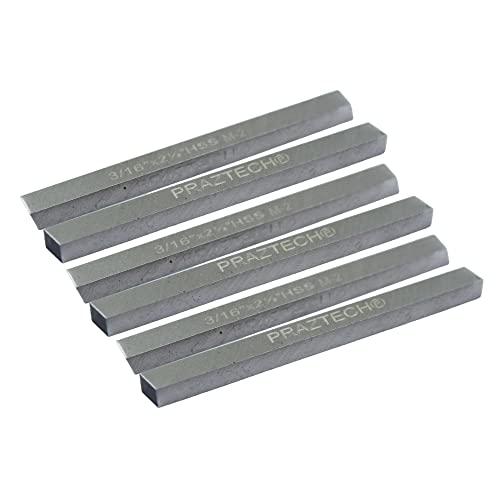
PRAZTECH 5 Pcs 3/16'' x 3/16'' x 2-1/2'' HSS Square Tool Bit Lathe...
Check price on AmazonWhy is the compound rest set to 29.5 degrees, not 30?
Standard 60 degree V-threads (both metric and Unified inch threads) are symmetrical, with each flank at 30 degrees from the thread axis. Setting the compound rest to exactly half that angle, 30 degrees, feeds the tool into the thread evenly on both flanks at once, which produces a rough finish and more tearing, especially in softer metals.
Setting the compound to 29.5 degrees instead angles the feed very slightly off that centerline, so the tool cuts primarily on the leading flank of each pass and only lightly skims the trailing flank. That single half degree offset is what gives a threading pass a cleaner shear cut instead of a scraping one.
What gear setup and thread dial technique does threading use?
Cutting a specific thread pitch requires change gears set to the ratio for that pitch, since the lathe leadscrew must advance the carriage exactly one pitch per spindle revolution. Use the change gear calculator alongside the mini lathe change gear chart for the specific machine. Write down the gear positions once they are correct for a given pitch, since resetting the same pitch again months later without notes means re-deriving the ratio from scratch.
On lathes with an imperial leadscrew cutting inch threads, a thread dial lets the operator engage the half nut at any of several marked positions and still land the tool back in the same thread groove for the next pass. On metric leadscrews cutting metric threads, or on any odd pitch combination, the safer method is leaving the half nut engaged and reversing the spindle between passes instead of disengaging it.
| Setting | Value |
|---|---|
| Thread form angle | 60 degrees (both flanks) |
| Compound rest angle | 29.5 degrees |
| Typical starting depth of cut | 0.002-0.004 in per pass |
| Tool tip | Ground or set to thread form, centered on stock |
What is the pass by pass procedure for cutting a thread?
Threading is a repeated, incremental process. Rushing the depth of cut is the most common way to tear a thread or break a tool tip.
- Turn the stock to the correct major diameter for the thread being cut, checked with a caliper or micrometer.
- Cut a small relief groove at the end of the threaded section if the design allows, giving the tool a clean runout point.
- Set the compound rest to 29.5 degrees and mount a 60 degree thread form tool at exact center height.
- Set the change gears or leadscrew selector for the target pitch, and confirm with the change gear calculator.
- Engage the half nut (or start the pass) and take a very light first pass, just enough to scribe a visible line.
- Retract the tool, return the carriage to the start, feed the compound in a small increment, and repeat.
- Continue light passes, feeding only the compound handle, until the thread reaches full depth.
- Check pitch and form with a thread pitch gauge as the thread nears finish depth.
- Test fit against a mating nut or gauge before removing the part, since a slightly deep final pass is much easier to fix than a part turned undersize.
How is thread depth checked without a matching nut?
The three-wire method places precision wires in the thread groove and measures over them with a micrometer, giving a repeatable numeric check of pitch diameter instead of a fit-and-guess approach. Run the target numbers through the three wire thread calculator before cutting, so the expected over-wires measurement is known ahead of time.
Choose wire diameters close to the size that contacts the thread flanks at the pitch line, since wires that are too large or too small change where on the flank they touch and throw off the measurement. Most three-wire sets sold for machinist use include a small range of wire sizes for exactly this reason, and the calculator output tells you which size to reach for before cutting begins.
What thread form tool should a beginner use?
A ground high speed steel tool bit, shaped to a 60 degree included angle with a small flat or radius at the tip, is the traditional and most flexible option; see how to grind an HSS lathe tool. Indexable carbide threading inserts exist in fixed pitch and form combinations and cut faster once the correct insert is on hand, but a ground HSS tool adapts to any pitch without buying a new insert for each thread size.
Whichever tool style is used, check it against a center gauge or a thread pitch gauge before the first cut, holding the tool tip up to a strong light to spot any asymmetry between the two flank angles. A tool ground even slightly off center produces a thread that measures correctly on paper but fits loosely or binds on one side once mated to a nut or bolt.
What goes wrong most often on a first threading attempt?
The most common first-attempt mistake is feeding straight in with the cross slide instead of the compound, which cuts on both flanks simultaneously regardless of the compound angle setting and defeats the whole purpose of the 29.5 degree offset. A close second is taking too heavy a first pass, which can chip a brittle HSS edge or overload a carbide insert before the thread form is even established.
A third common issue is losing track of which pass is next after a break in concentration, since a missed or doubled pass at the wrong compound setting can ruin an otherwise good thread. Marking the compound dial reading after each pass on a small notepad next to the machine removes the guesswork and keeps a long threading job on track across an interruption.
Shop the tools for this
An even spread across the price range, cheapest to premium.


Frequently asked questions
Why set the compound to 29.5 degrees instead of 30?
A full 30 degree setting feeds the tool into both thread flanks evenly at the same time, which increases tearing and heat in the cut. Backing off to 29.5 degrees shifts the feed so the tool shears mostly on the leading flank, producing a cleaner finish, especially in softer or gummier metals like aluminum.
How many passes does it take to cut a thread?
It varies with pitch and material, but a typical inch thread on mild steel might take 8 to 15 passes, starting very light and increasing depth of cut on early passes before tapering back down for the final finishing passes.
Do I need a thread dial to cut threads?
No. A thread dial makes disengaging and re-engaging the half nut faster, but the reliable fallback method, reversing the spindle direction between passes with the half nut left engaged, works on any lathe and any pitch combination.
What is the three-wire method used for?
It measures pitch diameter directly and repeatably by placing precision wires in the thread groove and measuring the overall width with a micrometer, removing the guesswork of test-fitting a nut over and over during the final passes.
Can carbide inserts replace a ground HSS threading tool?
Yes for a specific pitch and thread form, and they cut faster with less tool wear. The tradeoff is buying a matched insert for each pitch and form combination, whereas one ground HSS tool bit can be reshaped for a new job.
Keep going
Researched from published specifications, standards and verified owner reviews. Not professional advice. How we research.