The DEWALT 20V MAX cordless portable band saw at $274.99 is the pick for most home shops: it cuts bar stock, angle, and pipe to length anywhere in the shop without a cord, from a brand with a long track record on this exact tool.
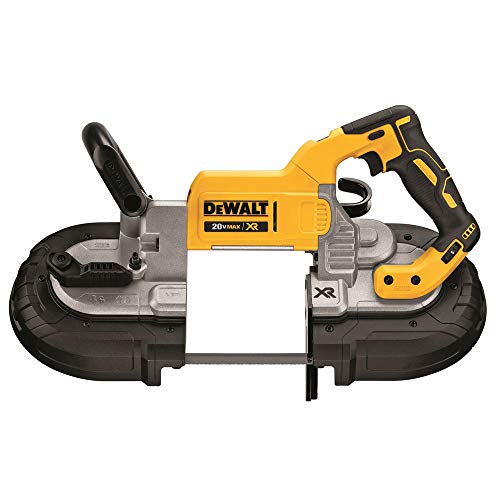
DEWALT 20V MAX Band Saw
A portable band saw does the job most hobby metalworking actually needs: cutting stock roughly to length before it goes on the lathe or mill for real machining. The DEWALT DCS374B is a bare tool that runs on the same 20V MAX battery platform as a lot of other DEWALT cordless tools, has integrated hang hooks, and a 5 inch cutting capacity that covers common bar, tube, and angle stock. Owner reviews consistently mention accurate blade tracking out of the box and blade life that holds up well as long as the correct TPI blade is used for the material, which is the single biggest factor in how long any bandsaw blade lasts.
Check price on AmazonThe three picks at a glance
| Tier | Pick | Price |
|---|---|---|
| Beginner | WEN Portable Band Saw for Metal | $129.27 |
| Intermediate | DEWALT 20V MAX Band Saw | $274.99 |
| Expert | JET 5" x 6" Metal Cutting Horizontal/Vertical Band Saw | $934.99 |
Beginner: Best first bandsaw
Who it is for: Someone currently cutting stock with a hacksaw or angle grinder and wants a straighter, faster cut without a big investment.
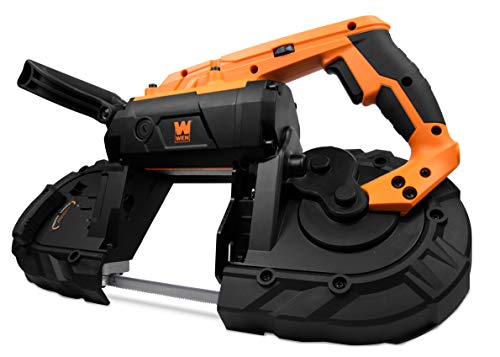
WEN Portable Band Saw for Metal
This WEN 10 amp corded portable band saw has variable speed and a 5 inch cutting capacity for a fraction of the cost of a cordless tool. It plugs in rather than needing a battery, which is a real advantage for a shop that already has outlets everywhere and does not want to manage batteries and chargers.
Check price on AmazonSkip it if: Cutting stock away from an outlet, or anyone who already owns a cordless tool battery platform they would rather stay on.
Intermediate: Buy once
Who it is for: A hobbyist who wants one portable band saw that stays accurate and reliable for years and does not mind buying into a battery platform.
DEWALT 20V MAX Band Saw
Detailed above. This is the tool most home shops should own if they buy only one bandsaw: portable enough to cut stock on a bench or in a corner of the garage, and accurate enough to feed the lathe and mill clean, square-cut stock.
Check price on AmazonSkip it if: High-volume repeat cutting, where a hand-held saw becomes tiring and a stationary saw is the better tool.
Expert: Performance ceiling
Who it is for: A shop cutting enough stock, in volume or in larger sizes, that a hands-free, table-mounted saw pays for itself in time and consistency.

JET 5" x 6" Metal Cutting Horizontal/Vertical Band Saw
This JET 5 inch by 6 inch horizontal and vertical band saw is a stationary tool built to cut rectangular and round stock hands-free at a set angle, repeatably, all day. It switches between horizontal cutting for stock and vertical cutting for contour work on plate, and it is the kind of saw a shop buys once cutting stock has become a bottleneck rather than an occasional task.
Check price on AmazonSkip it if: A shop that cuts stock a few times a month; the bench space, cost, and power draw of a stationary 4x6 saw are hard to justify at that pace.
Portable bandsaw or 4x6 horizontal bandsaw: which does a home shop need first?
A portable band saw is handheld, cuts by being guided through the stock, and works anywhere there is room to hold the tool and the material. It is the more flexible tool for a shop still figuring out its cutting volume, and it can cut stock clamped in a vise, laid on sawhorses, or held by hand for smaller pieces.
A 4x6 horizontal and vertical band saw sits on a stand or bench, clamps the stock in a built-in vise, and lowers the saw head through the cut on its own. It produces straighter, more consistently square cuts with no operator fatigue, but it needs dedicated floor or bench space and a fixed power connection.
| Type | Cut squareness | Bench space | Best for |
|---|---|---|---|
| Portable | Good, depends on operator | None, stores anywhere | Occasional cuts, field use, odd shapes |
| 4x6 stationary | Excellent, hands-free | Fixed footprint | Repeat cuts, batches of stock |
How much bandsaw does occasional hobby cutting actually require?
Most home shops cut stock to rough length a handful of times per project, not continuously, which is exactly what a portable band saw is built for. The 5 inch cutting capacity common to portable saws in this price range covers the bar stock, angle, and tube sizes a mini lathe or mini mill shop typically works with.
A stationary 4x6 saw earns its keep once a shop is cutting the same size stock repeatedly, batching parts for a run, or cutting stock large enough that holding a portable saw steady becomes tiring or unsafe.
What TPI blade fits common shop stock?
Blade teeth per inch, TPI, needs to match the thickness of the material being cut so that at least two to three teeth are always in contact with the stock. A coarser blade like an 18 TPI bi-metal blade cuts thicker solid bar efficiently, while a finer blade in the 24 TPI range handles thin-wall tube and sheet without ripping teeth off the blade.
A variable-pitch blade, such as a 10/14 TPI bi-metal blade, is a reasonable single blade to keep on hand for a shop that cuts a mix of stock sizes and does not want to swap blades for every job.
Cordless or corded: does battery power make sense for a stationary shop tool?
For a portable saw, cordless is a genuine convenience upgrade, since it removes the cord that gets caught on stock or the bench during a cut, and it lets the saw go wherever the material is. For a stationary 4x6 saw, the question does not apply the same way; those saws are plugged in and stay in one spot, so battery power adds nothing.
Also worth considering
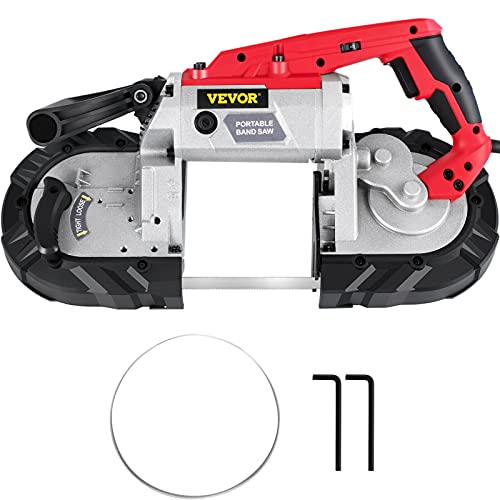
- PowerSmart Portable Band Saw ($159.99): PowerSmart 10 amp portable band saw: a lower-cost corded alternative to the WEN with the same basic capacity.
- Milwaukee Electric - M18 Fuel DEEP Cut Band Saw ($317.99): Milwaukee M18 Fuel deep cut band saw: a premium cordless option with more cutting depth for anyone already on the M18 battery platform.
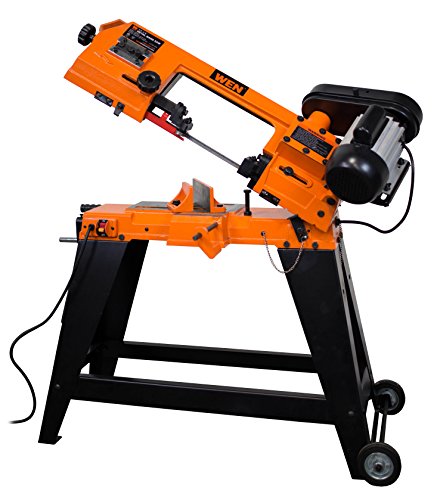
- 4x6 Horizontal Vertical Metal Cutting Bandsaw Band Saw ($699.99): Prolinemax 4x6 horizontal vertical band saw: a lower-cost way into a stationary saw than the JET, with the same basic horizontal and vertical function.
- Imachinist S6412121014 Bi-Metal Band Saw Blades 64-1/2" X 1/2" X... ($14.23): Imachinist bi-metal band saw blade, 10/14 TPI variable pitch: a good general-purpose replacement blade for mixed stock sizes.
More options across the price range
Chosen as an even spread from the cheapest to the most expensive listing in this category.




How we chose
These picks come from comparing published cutting capacity, motor amperage, and battery platform against Amazon listing details and verified owner reviews, not from cutting stock with any of these saws directly. Portable saws with recurring reviews about blade tracking drifting out of adjustment were passed over regardless of price.
The tiers follow the real upgrade path for cutting stock in a home shop: a basic corded portable saw to prove out the need, a cordless portable saw as the long-term daily tool, and a stationary 4x6 saw only once cutting volume justifies the bench space and cost.
Buying tips
Does cutting capacity matter more than motor amperage?
Cutting capacity, the largest round or rectangular stock the saw can swallow, matters more day to day than amperage. Almost every saw in this category has enough motor power to cut mild steel bar stock within its rated capacity; running out of capacity is the more common frustration.
Should a first bandsaw be corded or cordless?
Corded is the more budget-friendly choice for a shop that already has outlets nearby, since it skips the cost of batteries and a charger. Cordless earns its higher price once portability, cutting stock away from an outlet, actually matters.
How many spare blades should a shop keep on hand?
At least one or two spares in the TPI range used most, since a blade that dulls or breaks mid-project stops work entirely otherwise. Bi-metal blades hold an edge longer than carbon steel blades and are worth the small price difference for cutting steel.
Is a stand or table worth adding to a portable saw?
A simple stand that holds a portable saw at a fixed angle turns it into a mini chop saw for repeat cuts to length, which is a useful upgrade for a shop starting to batch parts without committing to a full stationary 4x6 saw.
Get these picks by email
Every item on this page with its current price in one email, so you can buy the shop in stages. No sales sequence.
Used only to send the list.Frequently asked questions
What size bandsaw does a mini lathe shop need for cutting stock?
A portable band saw with a 5 inch cutting capacity covers the bar stock, tube, and angle sizes a mini lathe or mini mill shop typically machines. Stock larger than that is uncommon in hobby work, so a bigger, more expensive saw rarely adds real capability for that kind of shop.
Can a portable band saw cut square enough for the lathe?
Close enough for facing off afterward, which is standard practice regardless of saw type. A portable saw guided carefully produces a cut within a degree or two of square, and the lathe or mill squares the final face anyway, so perfect saw accuracy is not required.
Why do band saw blades break or dull quickly on steel?
The most common causes are the wrong TPI for the stock thickness, feeding too fast, or a worn blade left in service too long. Matching TPI to material and letting the saw cut at its own pace, rather than forcing it, extends blade life significantly.
Is a 4x6 horizontal bandsaw overkill for a hobby shop?
For most hobbyists starting out, yes. A 4x6 saw is a real investment in bench space and cost that pays off once a shop is cutting stock in volume or in larger sizes. A portable saw handles occasional cutting for a fraction of the price and space.
What TPI blade is the best general-purpose choice for mixed stock?
A variable-pitch blade in the 10/14 TPI range is a practical single blade for a shop cutting a mix of solid bar and thinner tube or angle, since the varying tooth spacing handles a wider range of material thickness reasonably well without swapping blades constantly.
Keep going
Researched from published manufacturer specifications, listing details and verified owner reviews. Not hands-on testing and not professional advice. How we research.