Say this plainly before spending on a mill: most hobbyists should buy a lathe first. If a mill is genuinely the next step, the MechMaxx 6x20 R8 benchtop mill drill at $1699.00 is the reasonable place to start.

MechMaxx 6"x20'' Benchtop Mill Drill Machine
A benchtop mill is a real purchase, not a casual add-on: every machine on this page costs more than a complete mini lathe setup, and the honest advice for most people reading a mill review is to buy a lathe first if they do not already own one. Turning covers more common hobby jobs (shafts, bushings, facing, threading) than milling does, and a lathe teaches the fundamentals of speeds, feeds, and tool geometry at a much lower cost of entry. If milling really is the next tool you need, this MechMaxx uses an industry-standard R8 spindle taper, which keeps you compatible with the widest range of aftermarket tooling, and a 1HP motor that is enough for the aluminum and light steel work most hobby milling actually involves.
Check price on AmazonThe three picks at a glance
| Tier | Pick | Price |
|---|---|---|
| Beginner | INTBUYING Mini Milling Drilling Machine Benchtop Mill Drill... | $1565.00 |
| Intermediate | VEVOR 15.875-Inch Mill Drill Machine | $1799.91 |
| Expert | JET 18-Inch Mill Drill Machine | $3871.00 |
Beginner: Lowest-cost real entry point
Who it is for: A hobbyist who has decided milling, not turning, is the next tool needed, and wants the least expensive machine that is still a genuine benchtop mill.

INTBUYING Mini Milling Drilling Machine Benchtop Mill Drill...
A 5-1/2 by 20 inch table mill drill with an MT2 spindle taper and a 600W motor. MT2 tooling is widely available and inexpensive compared to R8, which keeps the total cost of ownership down even though R8 machines dominate the rest of this list. This is a genuine milling machine, not a drill press with a milling label, and it is priced closest to what a mini lathe costs.
Check price on AmazonSkip it if: Anyone who expects to run larger end mills or heavier cuts regularly; the smaller table and lighter motor limit how aggressive you can be compared to the R8 machines above it.
Intermediate: Buy once
Who it is for: A hobbyist committed to milling as an ongoing part of the shop, who wants the R8 tooling ecosystem and more table capacity than the entry machine.
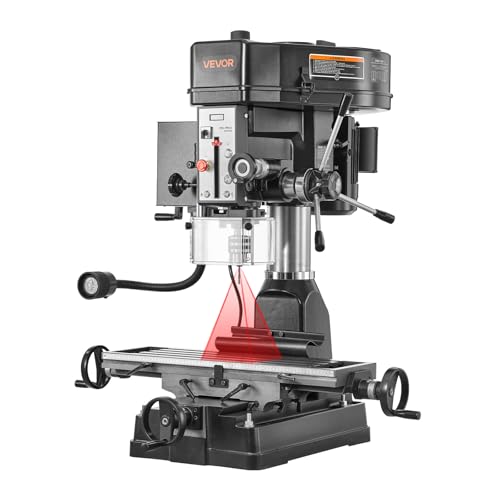
VEVOR 15.875-Inch Mill Drill Machine
A 15.875 inch mill drill with a 2HP motor and a variable speed range from 150 to 2560 RPM, which covers both slow, heavy cuts in steel and faster finishing passes in aluminum. It ships with a rotating vise and a work light already included, which are two accessories almost every mill owner buys separately otherwise.
Check price on AmazonSkip it if: Buyers who specifically need a factory-fitted digital readout or a power feed axis; those show up at the next price step, not here.
Expert: Performance ceiling
Who it is for: A hobbyist or small shop that wants an established industrial brand, a cast-iron column for rigidity, and 2HP of real cutting power.
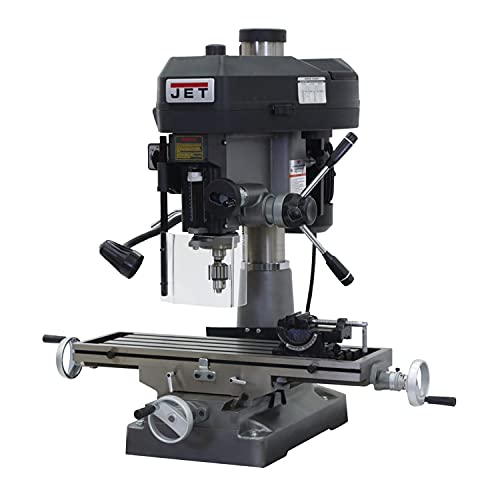
JET 18-Inch Mill Drill Machine
An 18 inch JET mill drill machine with a 2HP motor, 115/230V dual-voltage wiring, and a cast-iron column for the rigidity that lighter benchtop frames cannot match. JET is one of the longest-established brands in this space, which matters for parts availability and resale value years down the road. This is a genuine step toward shop-grade equipment rather than a hobby-priced machine with more features bolted on.
Check price on AmazonSkip it if: Anyone without a dedicated, reinforced bench or floor space for the weight; a cast-iron column mill is significantly heavier than the aluminum-frame benchtop machines earlier on this list, and it is not a casual purchase.
Should your next machine actually be a lathe instead of a mill?
This needs to be said plainly: for most hobbyists building a first home metal shop, a lathe covers more common jobs at a much lower cost than a mill does. Shafts, bushings, threaded parts, facing stock square, and repair turning all happen on a lathe, and a mini lathe in the 450 to 700 dollar range gets a beginner cutting real parts the same weekend it arrives. Every mill on this page costs more than that, and mills are genuinely an expert-tier aspiration: buyer data shows lathes in the hobby price range selling 50 or more units a month, while mills in the 1,600 dollar-plus range this category starts at show far less volume.
If you already own a lathe and have run into a project that specifically needs flat, square, or slotted features a lathe cannot cut, a benchtop mill is the right next step. If you are choosing between your first lathe and your first mill, choose the lathe.
| If your projects need | Buy this first |
|---|---|
| Shafts, bushings, threaded parts, facing round stock | A lathe |
| Flat surfaces, slots, keyways, drilled patterns on a grid | A mill |
| Both, eventually | Lathe first, mill once you hit a real limit |
MT2 versus R8: which spindle taper should you buy into?
MT2 (Morse Taper 2) tooling is generally less expensive and widely available secondhand, which keeps entry cost down. R8 is the more common taper on mid-size benchtop and full-size knee mills, and buying into R8 now means your tooling carries forward if you ever upgrade to a bigger mill later. If you are buying one mill and do not expect to upgrade, MT2 saves money. If there is any chance you upgrade within a few years, R8 protects that tooling investment.
What accessories does a benchtop mill actually need beyond the machine?
Almost every mill owner ends up buying a milling vise, a set of clamping parallels, and an edge finder within the first month, none of which are typically included. Check machinist vise and clamping kit and parallels picks before you assume the machine price is the whole budget. Use the feed rate calculator to set chip load for end mills once tooling is in hand; running an end mill too slow is the most common beginner mistake on a new mill.
Also worth considering
- MechMaxx 6"x20'' Benchtop Mill Drill Machine with DRO ($2099.00): MechMaxx 6x20 with a factory DRO added over the base model, at $2099.00, if you know you want digital readout from day one.
- BEILOCKERY Drilling Milling Machine 1100W Brushless Motor Metal Wood... ($3079.00): BEILOCKERY 1100W mill with X-axis power feed and a grating ruler scale for $3079.00, for buyers who want power feed without stepping up to the largest table size.
- Mechmaxx 1.5HP 7''x 27-1/2''Benchtop Mini Mill Drill Machine ($2799.00): MechMaxx 7x27.5 with a brushless motor and variable speed for $2799.00, a bigger table option below the JET.
More options across the price range
Chosen as an even spread from the cheapest to the most expensive listing in this category.


How we chose
Every mill above comes from the verified Amazon catalog for this site, matched by real published table size, motor power, spindle taper, and included accessories. None of this reflects hands-on testing; the recommendations are built from manufacturer specifications, listing details, and patterns across verified owner reviews.
This category is explicitly expert-tier and the Expert pick is a premium, established-brand machine rather than only the cheapest option on the list, because buyers shopping for a benchtop mill are already past the entry decision that mini lathes serve.
Buying tips
Do you need a mill if you already own a lathe?
Only if a specific project needs flat, square, or slotted features a lathe genuinely cannot produce. Many hobbyists run a lathe alone for years before a mill becomes necessary, and there is no rush to buy one before you hit that wall.
How much power do you actually need for hobby milling?
A 1 to 1.5HP motor covers aluminum and light steel work comfortably. 2HP matters more for heavier steel cuts and larger end mills, which is where the premium picks on this page earn their price over the entry-level machine.
Is a power feed axis worth paying for?
Power feed keeps a milling pass moving at a constant, even rate, which improves surface finish and reduces fatigue on long cuts, similar to auto feed on a lathe. It is a genuine quality-of-life upgrade but not essential on a first mill.
Get these picks by email
Every item on this page with its current price in one email, so you can buy the shop in stages. No sales sequence.
Used only to send the list.Frequently asked questions
Should I buy a lathe or a mill first for a home metal shop?
A lathe, in almost every case. Lathes cover more common hobby jobs (shafts, bushings, threading, facing) at a much lower typical price, and buyer data shows far higher sales volume for hobby lathes than for benchtop mills. Save the mill purchase until a specific project needs flat or slotted features a lathe cannot make.
What is the difference between MT2 and R8 spindle tapers on a mill?
MT2 tooling is generally cheaper and more available secondhand, which lowers entry cost on a first mill. R8 is the standard on most mid-size and full-size benchtop mills, so buying R8 tooling now protects your investment if you later upgrade to a larger machine. Neither is wrong for a first mill; it depends on upgrade plans.
How much does a benchtop mill cost compared to a mini lathe?
Benchtop mills in this class typically start around 1,500 dollars and climb well past 3,000 dollars for premium models, compared to 450 to 700 dollars for a hobby mini lathe. That price gap is a major reason mills are considered a later, expert-tier purchase rather than a first machine.
Is a cast-iron column mill worth the extra weight and cost?
For heavier cutting and long-term rigidity, yes. Cast iron dampens vibration and resists deflection under load better than lighter aluminum-frame benchtop mills, which shows up directly as better surface finish and tighter tolerances on demanding work.
What accessories do I need to actually use a new benchtop mill?
A milling vise, a set of clamping parallels, and an edge finder are the three most common first purchases after the mill itself, since almost no listing includes them. Budget for these separately; they are not optional extras for most projects.
Keep going
Researched from published manufacturer specifications, listing details and verified owner reviews. Not hands-on testing and not professional advice. How we research.