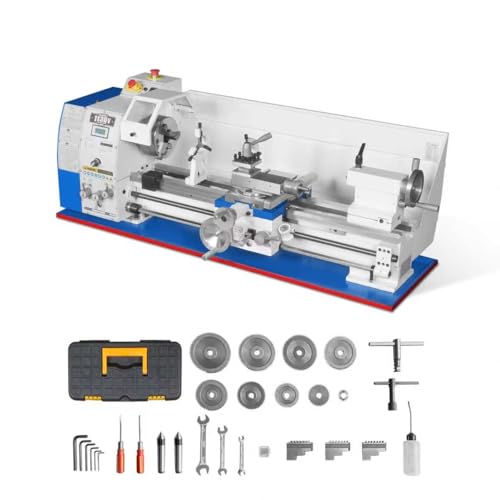
Start with a solid, level bench, a standard 110-120V circuit, good task lighting, and a mini lathe at $475.92 bolted down before anything else; tooling can be added project by project after that, rather than buying an entire shop worth of accessories on day one.

VEVOR Metal Lathe 7x14inch Precision Bench Top Mini Metal Lathe 550W...
Check price on Amazon
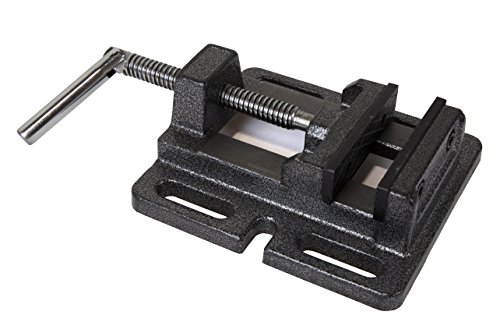
Nagpew Drill Press Vise
Check price on AmazonWhat bench and mounting does a mini lathe need?
A mini lathe needs a rigid, level bench or stand that will not flex or vibrate under cutting loads; a wobbly surface transfers directly into chatter and poor finish. Bolt the lathe down through its mounting holes rather than relying on rubber feet or friction alone, and shim it level with a machinist level before the first cut, since even a mini lathe cutting slightly out of level affects tool height consistency across a cut.
Bench height matters more than it seems: too low and the operator hunches over the work for hours; too high and fine control at the handwheels suffers. A comfortable working height puts the spindle centerline roughly at elbow height when standing.
What electrical setup does a home shop need?
Nearly every mini lathe, small mill, bench grinder and bandsaw in the hobby price range runs on a standard 110-120V household circuit, so most garages and basements already have adequate power for a first machine or two. A dedicated circuit for the shop, separate from lighting and other household loads, avoids nuisance breaker trips when a motor starts under load.
Add enough outlets that machines are not sharing a single strip with a bench grinder, shop vacuum and lighting all at once. Larger benchtop mills and some industrial-class bandsaws step up to 220V, so check the specification on any larger future purchase before assuming standard household power will cover it.
What is a reasonable order to build out a home shop in?
Buying everything at once is both expensive and unnecessary; most of what a shop needs becomes obvious project by project. A reasonable starting order gets a shop functional quickly without overspending on tools that will not see use for months.
- Bench or stand, bolted down and leveled, sized for the intended machine.
- The lathe itself, chosen per how to choose a mini lathe.
- Basic measuring tools: a digital caliper at minimum, a micrometer soon after.
- Eye protection and hearing protection, on hand before the first cut, not after.
- A workholding basics kit: extra chuck, a vise if a drill press or mill is also planned.
- Cutting fluid and a small supply of common stock to practice on.
- Storage for tooling that keeps cutting edges protected and organized, added once the tool count grows past a drawer or two.
- A bench grinder for tool sharpening, once resharpening becomes a routine need rather than an occasional one.
What lighting and dust control does a metal shop need?
Task lighting matters more in a metal shop than general room lighting, since reading a dial or caliper accurately depends on seeing fine graduations clearly. A flexible or articulating work light aimed directly at the cutting zone, in addition to whatever ambient lighting the space already has, makes a meaningful difference. Many mini lathes ship with a small integrated work light, which helps but rarely provides enough light on its own for fine measuring work.
Metal shops generate swarf and dust differently than woodshops: metal chips are heavier and do not typically need dust collection the way sawdust does, but grinding operations do throw fine particulate that benefits from a shop vacuum positioned nearby and, ideally, some airflow or ventilation for extended grinding sessions.
| Category | Minimum starting setup |
|---|---|
| Power | Dedicated 110-120V circuit, multiple outlets |
| Lighting | Articulating task light aimed at the work zone |
| Bench | Rigid, level, bolted-down mounting for the lathe |
| PPE | Safety glasses, hearing protection, face shield for grinding |
How does the shop scale from beginner to expert setups?
A shop typically grows through recognizable stages: a single mini lathe with basic measuring tools, then added workholding and a quick change tool post, then a mill once flat and square work is regularly needed, then precision measuring gear like a DRO and dial indicators once tolerance work becomes routine. See beginner lathe shop, intermediate metal shop and expert metal shop for what each stage typically includes.
What noise and vibration considerations matter in a shared living space?
A garage or basement shop adjacent to living space introduces noise and vibration concerns beyond what a detached shop building would have. Mini lathes themselves run fairly quietly at idle, but a bench grinder, bandsaw, or shop vacuum running at the same time adds up, and vibration from a machine bolted to a shared concrete slab can transmit further into a house than expected.
Rubber isolation pads under a bench or stand reduce vibration transmission noticeably compared to a bench bolted directly to the slab with no isolation layer, and are worth the small added cost for a shop above or adjacent to a bedroom or living area. Scheduling louder operations like grinding and sawing for reasonable hours is a simple courtesy that avoids friction with household members or neighbors.
What should be budgeted for consumables, not just tools?
Beyond the machines and measuring tools themselves, a shop has an ongoing consumables budget that is easy to forget when planning an initial purchase list: cutting fluid, replacement HSS or carbide inserts, sandpaper and files, shop rags, and stock for practice cuts and scrap projects. None of these are large individual costs, but they recur every month a shop sees regular use, unlike the one-time cost of the lathe or a chuck.
Setting aside a modest recurring budget for consumables, rather than being surprised by it after the initial tool purchases are made, keeps a shop running smoothly instead of stalling out waiting on a reorder of tap fluid or sandpaper mid-project.
Shop the tools for this
An even spread across the price range, cheapest to premium.


Frequently asked questions
Does a home metal shop need 220V power?
Not for most hobby-priced machines. Mini lathes, benchtop mills under roughly 1.5 HP, bench grinders, bandsaws and drill presses in the common hobby price range run on standard 110-120V household circuits. Only some larger, more industrial benchtop or floor-standing machines require 220V.
How much space does a starter home metal shop need?
A mini lathe and a sturdy bench can fit in a space as small as a single garage bay corner, roughly the footprint of a large workbench plus room to walk around it and access the tailstock end. Space needs grow noticeably once a mill and larger stock storage are added.
What is the first tool to buy after the lathe itself?
A digital caliper. Every subsequent step, from checking stock size to verifying a finished dimension, depends on being able to measure quickly and accurately, and it is a small cost relative to the lathe itself.
Should the lathe be bolted down permanently?
Yes, wherever possible. Bolting through the base mounting holes into a solid bench or stand keeps the machine from shifting or vibrating under load, which directly affects finish quality and part accuracy. Even mini lathes benefit noticeably from being solidly anchored rather than just set on a bench.
Is a shop vacuum necessary for a metal lathe?
Not strictly for turning itself, since metal chips are typically swept or brushed rather than vacuumed, but a shop vacuum earns its keep for clearing fine grinding dust and general cleanup, and is worth having on hand from the start.
Keep going
Researched from published specifications, standards and verified owner reviews. Not professional advice. How we research.