For steel and stainless, the VEVOR 29-piece M35 cobalt set at $59.40 covers 1/16 in to 1/2 in in the fractional sizes most projects need, and cobalt resists the heat that ruins standard HSS in harder metals.

VEVOR Cobalt Drill Bit Set
M35 cobalt drill bits hold their edge at higher temperatures than plain HSS, which matters the moment you drill stainless steel or anything work-hardened. This 29-piece set covers the 1/16 in to 1/2 in fractional range in 64th increments, the sizes that come up constantly in hobby metalwork, and the indexed case keeps them organized. Pair with the tap drill chart when a hole needs to be tapped afterward rather than left round.
Check price on AmazonThe three picks at a glance
| Tier | Pick | Price |
|---|---|---|
| Beginner | COMOWARE 29-Piece Drill Bit Set | $49.99 |
| Intermediate | VEVOR Cobalt Drill Bit Set | $59.40 |
| Expert | Cobalt Drill Bit Set - 115Pcs M35 HSS Bits | $137.97 |
Beginner: Best first set
Who it is for: someone drilling mild steel and aluminum occasionally who does not yet need number or letter sizes
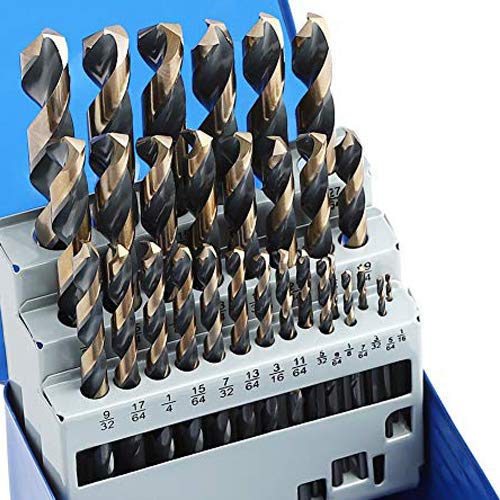
COMOWARE 29-Piece Drill Bit Set
The COMOWARE 29-piece HSS set at $49.99 covers 1/16 in to 1/2 in in standard high speed steel with a 135 degree split point that starts more easily on curved or angled stock than an older 118 degree point.
Check price on AmazonSkip it if: stainless steel or hardened material, where standard HSS dulls quickly
Intermediate: Buy once
Who it is for: a hobbyist who drills mild steel, stainless, and aluminum regularly and wants bits that hold up to that mix
VEVOR Cobalt Drill Bit Set
The VEVOR 29-piece M35 cobalt set at $59.40 handles the full range of metals a hobby shop sees without needing a separate set for stainless. Cobalt costs more than HSS but lasts long enough in mixed material use to pay for itself.
Check price on AmazonSkip it if: work needing number or letter drill sizes for precise tap or reamer prep; add a numbered set separately
Expert: Performance ceiling
Who it is for: a machinist who needs exact tap drill sizes across fractional, letter, and number gauges for precision threading and reaming work
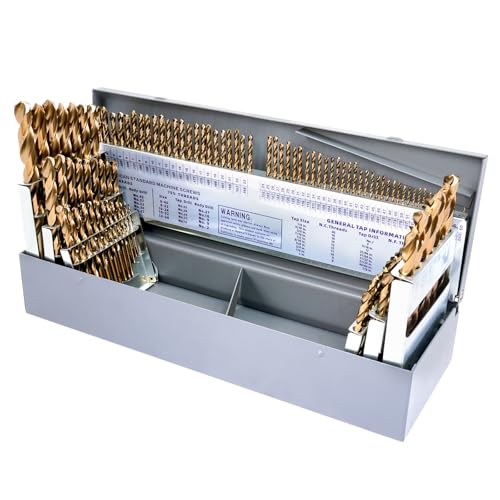
Cobalt Drill Bit Set - 115Pcs M35 HSS Bits
The SEDIANAS 115-piece M35 cobalt set at $137.97 spans fractional 1/16 in to 1/2 in, letters A through Z, and numbers 1 through 60 in one case, matching almost any tap drill size the tap drill chart calls for without substituting a nearby size.
Check price on AmazonSkip it if: a beginner whose projects do not yet call for exact number or letter drill sizes; the fractional-only set covers most early projects for far less money
Cobalt or standard HSS: which do I actually need?
M35 cobalt bits contain 5 to 8 percent cobalt alloyed into the steel, which raises the temperature the edge can withstand before softening. That translates directly into longer life in stainless steel, cast iron, and any work-hardened material, at a price premium over plain HSS.
For softwood, aluminum, and mild steel drilled occasionally, standard HSS bits work fine and cost less. The moment stainless or harder alloys enter the mix regularly, cobalt pays for itself in bits that do not need constant resharpening.
| Bit type | Best for | Weak point |
|---|---|---|
| Standard HSS | Aluminum, mild steel, wood | Dulls fast in stainless or hardened metal |
| M35 cobalt | Stainless, cast iron, mixed metal use | Costs more, slightly more brittle |
| Center drill | Starting a hole on the lathe accurately | Not meant to drill deep, snaps if forced |
Fractional, number, or letter: what is the difference?
Fractional sizes (1/16 in, 1/8 in, and so on) cover general drilling in large steps. Number sizes (#1 through #80, smallest to largest confusingly) and letter sizes (A through Z) fill the gaps between fractional sizes with much finer resolution, which matters enormously for tap drilling: a hole even a few thousandths off the correct tap drill size either strips a thread or leaves too little engagement.
The tap drill chart lists the correct drill for every common thread, in whichever of the three systems the tap requires. Look up the exact thread on the tap drill hub for a specific size like 1/4-20 or M6x1 rather than rounding to the nearest fractional bit you own.
What is a center drill for and do I need one?
A center drill has a short, stiff, stubby geometry that resists wandering when starting a hole on rotating stock in a lathe chuck. A standard twist drill flexes slightly on contact and can walk off center, especially on a part that is not perfectly faced flat.
Center drill first, then follow with a standard twist bit for depth, and this two-step approach produces straighter, more accurately located holes than a twist drill alone. Never force a center drill deep; the geometry is not designed for it and they snap under side load.
How do I pick the right drill speed for the material?
Drill speed follows the same SFM logic as milling and turning: harder or tougher materials need slower RPM, softer materials tolerate faster. Bit diameter converts that SFM figure to an actual RPM.
Run the diameter through the RPM calculator with the material SFM from the cutting speed chart, and see a full worked example at speeds and feeds for 304 stainless with an HSS drill.
How do I convert between decimal, fraction, and drill number?
Drill bit packaging and reference tables mix decimal, fractional, letter, and number designations constantly, and matching a caliper reading to the right bit size by hand is error-prone. The drill size converter takes a decimal measurement and returns the nearest standard bit in every system, and the drill size chart lists the full table for reference.
Also worth considering
- 7pcs Center Drill Bits Set ($7.99): A 7-piece center drill set at $7.99 for starting accurate, wobble-free holes on the lathe before switching to a twist drill.
- IVY Classic 01668 5-Piece Number/Letter Drill Set ($26.26): The IVY Classic 5-piece number and letter drill set at $26.26 for filling in a handful of specific tap drill sizes without buying a full 115-piece case.
- Drill America - DWD26J-SET 26 Piece High Speed Steel Drill Bit Set... ($69.62): The Drill America 26-piece letter set (A to Z) at $69.62 for a shop that already owns a fractional set and only needs letter sizes.
- 60pc Drill Bit Set M2 HSS High Speed Steel Bits Numbered #1-60 Metal... ($23.99): A 60-piece numbered set (#1 to #60) at $23.99 for tap drilling small machine screw threads without the cost of a combined 115-piece case.
More options across the price range
Chosen as an even spread from the cheapest to the most expensive listing in this category.


How we chose
Every set here is pulled from current Amazon listings and matched to its published material grade (HSS versus M35 cobalt), size range, and piece count. None of these were run in a shop; heat tolerance and wear claims follow published cobalt versus HSS metallurgy rather than owner testing.
Sets were chosen for size range overlap with common tap drill and general drilling needs in a hobby shop, for indexed case organization that keeps sizes from getting lost, and for price relative to piece count and material grade.
Buying tips
Do I need a number and letter set if I only drill fractional sizes now?
Not immediately. Fractional-only covers general drilling fine. The moment you start tapping threads regularly, exact tap drill sizes in number or letter gauges become necessary for correct thread engagement, so budget for that set as projects grow more precise.
Why does my drill bit squeal or smoke in stainless steel?
That is usually too high an RPM for the material, not a dull bit. Stainless work-hardens quickly if the bit rubs instead of cutting, which is caused by too little pressure or too much speed. Slow the RPM and maintain steady downward pressure to keep the edge biting.
Is an indexed case worth the extra cost over a bare set?
Yes for anything past a handful of bits. A labeled slot per size means grabbing the right bit takes seconds and prevents a lost bit from making the whole set unusable for tap prep, where a single missing size can block a job.
Should I resharpen cheap bits or replace the set?
A drill grinding jig can restore an edge on a dulled but otherwise straight bit, and is worth learning for cobalt bits given their cost. For very cheap HSS sets, replacement often costs less than the jig and time investment.
Get these picks by email
Every item on this page with its current price in one email, so you can buy the shop in stages. No sales sequence.
Used only to send the list.Frequently asked questions
What is the difference between cobalt and titanium coated drill bits?
Cobalt is alloyed through the entire bit, so the heat resistance holds even after resharpening. Titanium coating (like TiN) is a surface layer only a few microns thick that wears off with use or resharpening, after which the bit performs like plain HSS underneath. Cobalt is the better long-term investment for metal.
Can I drill stainless steel with a standard HSS bit?
Yes, but expect much shorter tool life. Stainless work-hardens under a dull or slow-cutting edge, which accelerates further dulling. A cobalt bit at the correct RPM, with steady pressure and cutting fluid, drills stainless far more reliably than standard HSS.
How do I know what size drill bit to use before tapping a hole?
Look up the thread size on the tap drill chart or the tap drill hub for the exact bit needed. Using the wrong size either strips the thread (hole too large) or breaks the tap (hole too small).
What does a 135 degree split point do that a 118 degree point does not?
A 135 degree split point has a flatter tip profile that starts cutting on contact instead of skating across the surface first, which means less walking on curved stock or hardened metal and less need for a center punch mark. A 118 degree point is the older standard geometry.
Why do I need a center drill if I already own twist drills?
A center drill starts a hole accurately on rotating lathe stock without wandering, thanks to its short, rigid geometry. A standard twist drill can flex and walk off center when starting a cut, especially on an unfaced or slightly uneven surface, producing an off-center hole.
Keep going
Researched from published manufacturer specifications, listing details and verified owner reviews. Not hands-on testing and not professional advice. How we research.