The EFFICERE 60-piece SAE and metric set at $39.85 covers the common thread sizes in both systems with taps, dies, and a wrench in one case, enough for most hobby repair and fabrication work.
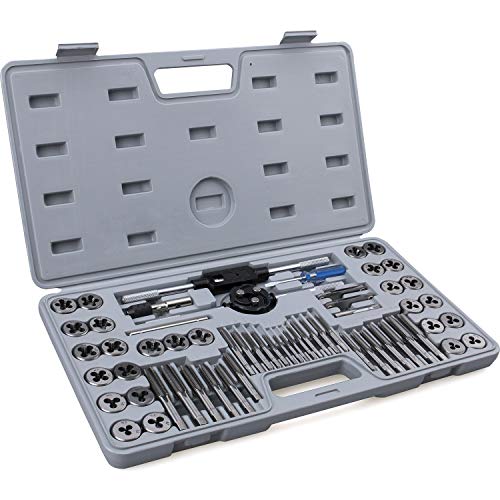
60-Pc Master Tap and Die Set - Include SAE Inch Size #4 to 1/2" and...
Sixty pieces spanning #4 to 1/2 in SAE and M3 to M12 metric, in both coarse and fine thread, covers the overwhelming majority of fasteners a home shop encounters without buying separate SAE-only and metric-only sets. Always cut the correct tap drill size first, from the tap drill chart or the tap drill calculator; a hole even slightly off ruins the thread or breaks the tap.
Check price on AmazonThe three picks at a glance
| Tier | Pick | Price |
|---|---|---|
| Beginner | IRWIN Tap And Die Set | $47.86 |
| Intermediate | 60-Pc Master Tap and Die Set - Include SAE Inch Size #4 to 1/2" and... | $39.85 |
| Expert | GEARWRENCH 114 Piece Ratcheting Tap and Die Set | $280.06 |
Beginner: Best first set
Who it is for: someone repairing stripped threads or tapping the occasional bolt hole who does not need metric sizes yet

IRWIN Tap And Die Set
The IRWIN 12-piece fractional set at $47.86 covers the common SAE sizes with a straightforward, reliable tap and die combination from a brand widely stocked at hardware stores, so replacement taps are easy to find later.
Check price on AmazonSkip it if: anyone working on metric fasteners or needing a wider size range
Intermediate: Buy once
Who it is for: a hobbyist doing general fabrication and repair across both American and metric fasteners
60-Pc Master Tap and Die Set - Include SAE Inch Size #4 to 1/2" and...
The EFFICERE 60-piece SAE and metric set at $39.85 handles both fastener systems in coarse and fine thread, avoiding the gap where a metric bolt shows up on an otherwise SAE-only bench.
Check price on AmazonSkip it if: production tapping where a ratcheting handle saves significant time; consider a ratcheting handle set for volume work
Expert: Performance ceiling
Who it is for: a machinist tapping frequently who wants a ratcheting handle and a wide size range for speed and precision

GEARWRENCH 114 Piece Ratcheting Tap and Die Set
The GEARWRENCH 114-piece ratcheting set at $280.06 pairs a ratcheting tap handle, which cuts tapping time significantly on repeated holes, with a broad SAE and metric range and dies for cutting or repairing external threads.
Check price on AmazonSkip it if: occasional use; a ratcheting handle set costs several times a basic kit and pays off mainly with volume tapping
Spiral point or straight flute taps: which cuts better?
A straight flute (hand) tap cuts a thread and pushes some chips forward, some back, making it prone to clogging in a blind hole. A spiral point tap pushes chips ahead of the tap and out the far side, which works well in through-holes but can jam a blind hole by packing chips at the bottom.
For blind holes, a straight flute tap with frequent backing-out to clear chips is the safer choice. For through-holes, a spiral point tap cuts faster and produces a cleaner thread with less binding.
| Tap style | Best for | Risk |
|---|---|---|
| Straight flute (hand tap) | Blind holes, general use | Chip packing without frequent backing out |
| Spiral point | Through-holes | Chip jam if used in a blind hole |
| Spiral flute | Blind holes in gummy material | Costs more than straight flute |
How do I find the right tap drill size?
Every thread size has a specific recommended tap drill diameter that leaves the correct percentage of thread engagement, typically 75 percent for hand tapping. Too large a hole strips easily under load; too small a hole risks breaking the tap and leaves a badly finished thread even if it survives.
The tap drill chart lists the correct drill for every common SAE and metric thread. For a fast lookup on a specific size, the tap drill calculator returns the answer directly, and specific thread pages like 1/4-20, #10-32, and M8x1.25 give worked examples.
What is the difference between coarse and fine thread?
Coarse thread (UNC, or the larger pitch number in metric) has fewer, deeper threads per inch, which resists stripping and cross-threading and is the standard choice for general fastening, especially in softer materials like aluminum.
Fine thread (UNF, or a smaller metric pitch) has more, shallower threads per inch, giving a larger contact area for the same diameter and holding better against vibration. It is more prone to cross-threading and generally used where clearance or holding power matters more than ease of assembly.
The thread pitch converter converts between TPI and metric pitch when comparing a fastener spec across systems, and the thread pitch chart lists both coarse and fine standards side by side.
How much cutting fluid does tapping actually need?
Tapping generates significant friction in a blind or tight hole, and dry tapping in steel is a common cause of broken taps, especially in the smaller sizes. A drop of cutting fluid on the tap before starting, and again every few turns, reduces the torque needed and the risk of snapping a tap off inside the workpiece, which is a difficult repair.
Aluminum and brass tap more easily dry but still benefit from fluid to clear chips and prevent galling, particularly in aluminum where the material can grab the tap.
Do I need dies as well as taps?
Taps cut internal threads (inside a hole); dies cut external threads (on a rod or bolt shank). Most hobby work leans heavily toward tapping holes, but dies come up for repairing damaged bolt threads, extending a stud, or making a custom threaded rod from stock.
A combined tap and die set covers both needs in one case; a tap-only set saves money for a shop that never cuts external threads.
Also worth considering
- uxcell 7pcs Spiral Point Tap Set M2 M2.5 M3 M3.5 M4 M5 M6 Metric Thread ($15.39): A 7-piece metric spiral point tap set at $15.39 for anyone wanting faster, cleaner-chip-clearing taps in the small metric sizes common on hobby electronics and instrument work.
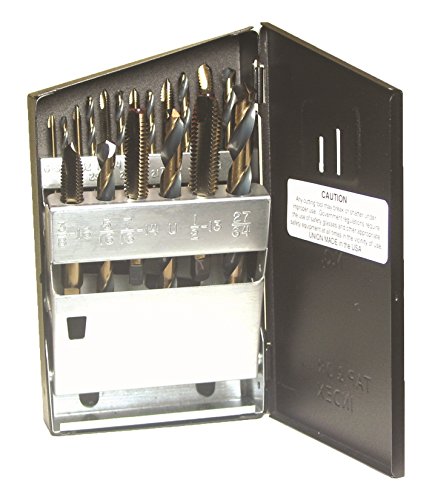
- SHARS U.N.C. 18 pcs HSS Spiral Point Tap/Drill Set 404-7207 P ($59.95): An 18-piece UNC spiral point tap and drill combination at $59.95 that pairs the correct tap drill with each tap, removing the lookup step entirely for the sizes it covers.
- YIYEIE 8PC Ratcheting Tap Handle ($40.79): A ratcheting tap and die handle at $40.79 for upgrading an existing basic set without buying a whole new box of taps.
More options across the price range
Chosen as an even spread from the cheapest to the most expensive listing in this category.


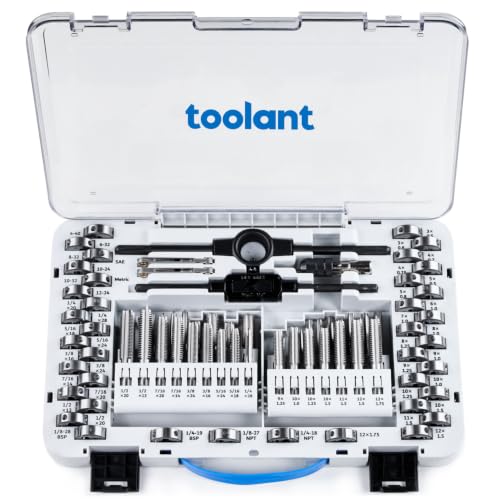

How we chose
Every set here is pulled from current Amazon listings and matched to its published thread system coverage (SAE, metric, or both), tap style, and handle type. None of these were run in a shop; tapping technique and chip-clearing guidance follow published tap geometry standards rather than owner testing.
Sets were chosen for size range covering common hobby fasteners, for handle quality (basic T-handle versus ratcheting), and for case organization that keeps small taps from getting lost, which is a frequent complaint in cheaper unindexed kits.
Buying tips
Why did my tap break off inside the hole?
The most common causes are a tap drill hole that is too small, forcing the tap without backing out to clear chips, or dry tapping in steel without cutting fluid. A broken tap is very difficult to remove; verify drill size and use fluid before tapping steel.
Should I buy SAE-only, metric-only, or a combined set?
If your projects only ever use one fastener system, a dedicated set of that size range is cheaper per tap. Most hobby shops eventually encounter both systems, especially when working on imported equipment or mixed-era projects, making a combined set the safer first purchase.
What is a bottoming tap and when do I need one?
A bottoming tap has a shorter chamfered lead, letting it cut threads closer to the bottom of a blind hole than a standard taper tap. Most kits include a taper tap only; a bottoming tap is a specialty purchase for holes that need full thread depth to the very bottom.
Is a ratcheting tap handle worth the extra cost?
For occasional tapping, a basic T-handle wrench works fine and costs far less. A ratcheting handle speeds up repeated tapping significantly by letting you tap without releasing grip on the backstroke, which matters mainly for production runs or tapping many identical holes.
Get these picks by email
Every item on this page with its current price in one email, so you can buy the shop in stages. No sales sequence.
Used only to send the list.Frequently asked questions
What size drill bit do I need for a 1/4-20 tap?
A 1/4-20 UNC thread uses a #7 drill bit for standard 75 percent thread engagement. Check the tap drill chart or the 1/4-20 tap drill page for the exact number, since substituting a nearby fractional size risks a stripped or overly tight thread.
Can I use a hand tap without cutting fluid?
You can in aluminum or brass for a shallow hole, but in steel this is a common cause of tap breakage from excess friction and heat. A drop of cutting fluid before starting and every few turns during tapping reduces the torque needed and extends tap life significantly.
What is the difference between a taper tap and a plug tap?
A taper tap has the longest chamfered lead (6 to 10 threads), easing the start of a thread in a through-hole but not reaching full depth near the bottom of a blind hole. A plug tap has a shorter chamfer (3 to 5 threads) and reaches closer to full thread depth, making it the more common all-purpose tap in hobby sets.
How do I remove a broken tap from a hole?
Options include a tap extractor tool that grips the broken flutes, penetrating oil and careful reverse pressure, or in stubborn cases drilling out the tap with a carbide bit (harder than the broken HSS tap) and re-tapping oversized. Prevention through correct drill size and cutting fluid is far easier than any extraction method.
Do I need both coarse and fine thread taps for the same diameter?
Only if your projects specifically call for both. Coarse thread is the default for general fastening and resists cross-threading better; fine thread suits applications needing more thread engagement or vibration resistance. Most beginner projects only need coarse thread taps in the sizes involved.
Keep going
Researched from published manufacturer specifications, listing details and verified owner reviews. Not hands-on testing and not professional advice. How we research.