For most hobby mills, the LU&MN 4-flute 1/4 in carbide set at $58.99 covers general steel and aluminum work in one common diameter without the cost of a full index.

LU&MN Carbide Square End Mills
A 1/4 in shank fits almost every benchtop mill collet and R8 adapter sold for hobby machines, and 4 flute carbide holds an edge in mild steel and aluminum far longer than HSS at the same price. Five pieces means a spare when one snaps in a stalled cut. Carbide is more brittle than HSS, so it rewards a rigid setup and the correct RPM more than it forgives a heavy-handed feed. Run it through the RPM calculator with the cutter diameter before the first pass.
Check price on AmazonThe three picks at a glance
| Tier | Pick | Price |
|---|---|---|
| Beginner | AUTOTOOLHOME 8PCS HSS 4-Flute End Mill Set CNC Milling Bits 1/16''-1/2'' | $15.89 |
| Intermediate | LU&MN Carbide Square End Mills | $58.99 |
| Expert | Accusize Industrial Tools 20 Pc H.S.S. Tin Coated End Mill Set | $192.00 |
Beginner: Best first set
Who it is for: someone with a mini mill or drill press converted for light milling who wants a few working diameters without committing to carbide
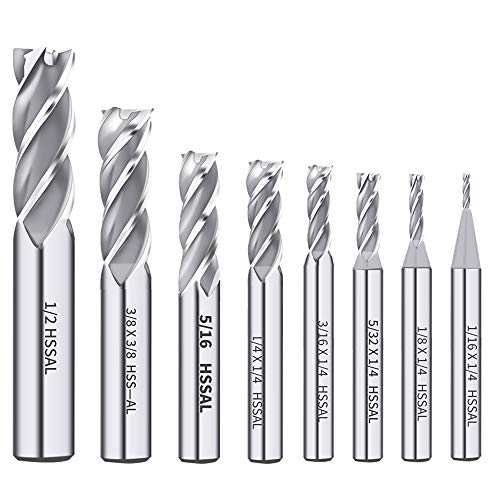
AUTOTOOLHOME 8PCS HSS 4-Flute End Mill Set CNC Milling Bits 1/16''-1/2''
The AUTOTOOLHOME 8-piece HSS set at $15.89 spans 1/16 in to 1/2 in in one box. HSS end mills tolerate an inconsistent feed and a less rigid mill far better than carbide, and they cost little enough that a broken flute is not a setback. Fine for aluminum, brass, and mild steel at modest depths of cut.
Check price on AmazonSkip it if: anyone milling hardened steel or wanting a finish that skips a filing pass
Intermediate: Buy once
Who it is for: a hobbyist doing regular aluminum and mild steel work who wants one reliable diameter that holds up over years
LU&MN Carbide Square End Mills
The LU&MN 1/4 in 4-flute carbide set at $58.99 is the everyday diameter for slotting, pocketing, and facing on a benchtop mill. Carbide keeps a sharp edge through far more linear feet than HSS, and 1/4 in shank fits the collets most hobby mills ship with.
Check price on AmazonSkip it if: work needing very small diameters under 1/8 in or very large slots over 3/8 in wide
Expert: Performance ceiling
Who it is for: a machinist running a rigid mill who wants a broad diameter range in premium coated carbide for both roughing and finishing passes

Accusize Industrial Tools 20 Pc H.S.S. Tin Coated End Mill Set
The Accusize 20-piece TiN coated metric set at $192.00 spans 3mm to 20mm in both 2 flute and 4 flute geometries, letting one box cover slotting, plunging, and finishing across most jobs a hobby mill can physically handle.
Check price on AmazonSkip it if: a mini mill without the spindle power or rigidity to use the larger diameters in this set; buy the 1/4 in set first
Carbide or HSS for a hobby mill?
HSS end mills flex slightly under load, which makes them more forgiving on a mini mill with some spindle play or backlash in the table gibs. Carbide holds a sharper edge far longer and cuts cleaner in steel, but it is brittle: a cutter that catches in a chattering setup snaps instead of dulling.
A shop with a rigid mill, a good vise, and consistent feed rates gets more life and better finish from carbide. A shop still tuning gibs and belt tension, or running an import mini mill with known flex, gets more forgiving results from HSS while that tuning happens.
| Material | HSS end mill | Carbide end mill |
|---|---|---|
| Aluminum | Works, moderate life | Excellent, long life |
| Mild steel (1018) | Works, shorter life | Good, needs rigid setup |
| Stainless steel | Poor, dulls fast | Good with correct SFM |
| Hardened tool steel | Not recommended | Only with rigid mill and slow feed |
What flute count actually changes?
Two flute end mills clear chips fastest and are the standard choice for aluminum, where gummy chips need somewhere to go. Four flute end mills leave less room per flute for chip clearance but cut smoother in steel and produce a better surface finish at the same RPM.
Center-cutting end mills, marked as such or shown plunging straight into the material in the listing photos, can drill a starting hole and mill in one tool change. A non-center-cutting end mill needs a pilot hole or a ramped entry.
How do I set the right speed for each diameter?
Surface feet per minute (SFM) depends on the material, not the machine. Aluminum runs 300 to 600 SFM with carbide, mild steel runs 80 to 120 SFM with carbide, and stainless steel runs slower still. The cutter diameter converts that SFM figure into an actual spindle RPM.
Run the diameter and material SFM through the RPM calculator before the first cut on a new setup, and check the cutting speed chart for starting SFM figures by material and cutter type. Feed rate then follows from chip load per tooth, flute count, and RPM through the feed rate calculator.
For a full worked example with a specific diameter and material pairing, see speeds and feeds for 6061 aluminum with a carbide end mill or 1018 steel with an HSS cutter for the equivalent lathe tool numbers.
Coating: does it matter on a hobby budget?
TiN (titanium nitride) coating adds surface hardness and reduces friction, extending tool life modestly in steel. AlTiN and TiAlN coatings hold up at higher temperatures and suit faster feeds in harder materials. On a hobby mill running conservative feeds, coating matters less than flute count and diameter selection, but it costs little extra and never hurts.
Uncoated HSS and uncoated carbide both work fine for occasional hobby use; coating pays off more on a shop running a cutter for hours at a stretch.
How many end mills does a beginner actually need?
Most first projects need only two or three diameters: something around 1/8 in for detail work, 1/4 in as the workhorse size, and maybe 1/2 in for clearing material fast. Buying a huge index before knowing which diameters get used wastes money on cutters that sit in the case.
Start with a 1/4 in 4-flute carbide set for steady work, or an 8-piece HSS set to explore diameters cheaply, then fill in specific sizes as projects demand them.
Also worth considering
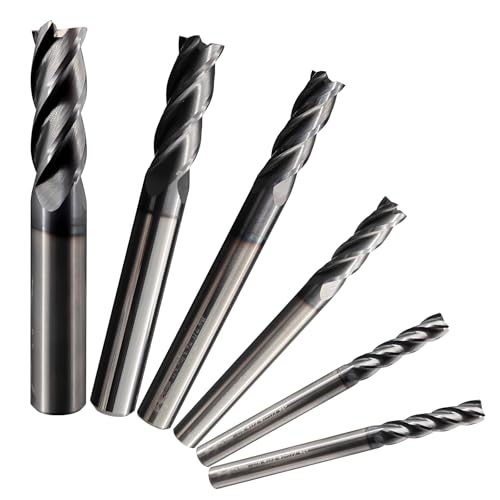
- 1/8" Carbide Square End Mill for Aluminum Copper Applications ($39.99): A 10-pack of 1/8 in carbide end mills at $39.99 for anyone snapping small-diameter cutters regularly and wanting spares on hand.
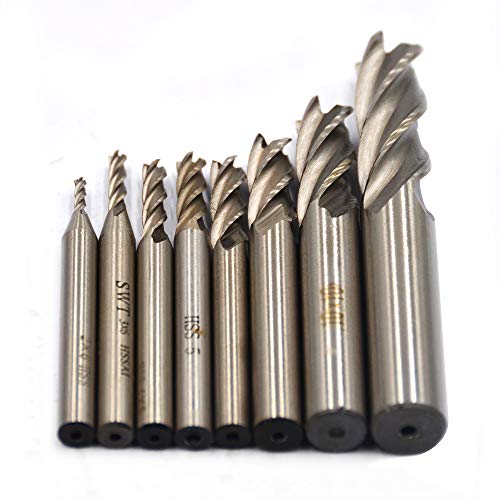
- Shars 3/16" - 3/4" 4 Flute HSS Uncoated Single End Center Cut End... ($61.95): The Shars 10-piece uncoated HSS set at $61.95 spans 3/16 in to 3/4 in for a shop that wants one box of larger HSS diameters without buying carbide yet.
- VCT Tools 20 Pc Hss Tin Coated End Mill Set ($89.95): The VCT 20-piece TiN coated HSS set at $89.95 mixes 2 and 4 flute geometry from 3/16 in to 3/4 in, a middle ground between the cheap 8-piece sets and full carbide.
More options across the price range
Chosen as an even spread from the cheapest to the most expensive listing in this category.




How we chose
Every end mill here is pulled from current Amazon listings and matched to its published title, flute count, coating, and shank diameter. None of these were run in a shop or timed on a mill; the material recommendations follow published SFM ranges for HSS and carbide cutters in aluminum, mild steel, and stainless.
Sets were chosen for diameter overlap with common hobby mill collets (1/4 in and metric equivalents), for flute count matching typical hobby work, and for price relative to piece count. Owner review patterns on snapped flutes and coating wear were weighed against price rather than treated as lab data.
Buying tips
Should I buy a big index set or a few single end mills?
A big index looks efficient but most of the diameters sit unused for a typical hobby project list. Buy a small set or singles in the diameters your actual projects call for, and add sizes as you need them rather than paying for a full range up front.
What shank size fits my mill?
Check your mill spindle or collet chuck before ordering. 1/4 in and 3/8 in shanks are the most common on import benchtop mills; a mismatched shank needs a reducing collet or will not chuck up at all.
Do I need a spare end mill in each diameter?
For a diameter used often, yes. A snapped flute mid-project with no spare means the job stops. Sets that include duplicates, or buying a second single of your workhorse size, avoid that.
Is a 2 flute or 4 flute end mill better for a first purchase?
A 4 flute general-purpose set handles steel and aluminum reasonably well and is the more common default for mixed hobby work. Buy dedicated 2 flute cutters later specifically for aluminum if chip packing becomes a problem.
Get these picks by email
Every item on this page with its current price in one email, so you can buy the shop in stages. No sales sequence.
Used only to send the list.Frequently asked questions
Can I use the same end mill for aluminum and steel?
Yes, a general-purpose 4 flute carbide or HSS end mill cuts both, but life and finish suffer versus a cutter matched to the material. Aluminum benefits from fewer flutes and higher SFM; steel wants slower SFM and can use more flutes. A dedicated set for each material is a step up once you know which material you cut most.
Why did my carbide end mill snap immediately?
Carbide is brittle and has zero tolerance for chatter, an unsecured workpiece, or a spindle running too slow for the chosen feed. Check RPM against the calculator, tighten the vise and workholding, and reduce depth of cut on the first pass in a new setup before increasing it.
What is the difference between a center-cutting and non-center-cutting end mill?
A center-cutting end mill has flutes that meet at the tip and can plunge straight down into material like a drill. A non-center-cutting end mill has a small flat or hole at the center and needs a pre-drilled hole or a ramping entry move before it can mill sideways.
How do I know what RPM to run a new end mill at?
Look up the SFM range for your material and cutter type, then convert to RPM using the cutter diameter. The RPM calculator does this conversion directly, and the cutting speed chart lists starting SFM figures for common materials.
Do coated end mills actually last longer on a hobby mill?
TiN, TiAlN, and AlTiN coatings reduce friction and add surface hardness, which extends tool life measurably in steel and stainless under sustained cutting. On light, occasional hobby use the difference is smaller, but coating adds little to price and rarely hurts performance.
Keep going
Researched from published manufacturer specifications, listing details and verified owner reviews. Not hands-on testing and not professional advice. How we research.