Buy the iGaging digital caliper at $37.99 for an instant numeric readout and unit switching. Buy the iGaging dial caliper at $38.99 if you would rather never worry about a dead battery mid-project.
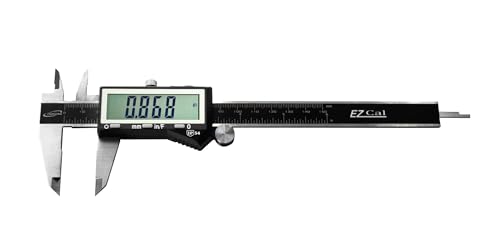
iGaging IP54 Electronic Digital Caliper 0-6" Display...
Check price on AmazonThe two options side by side
iGaging IP54 Electronic Digital Caliper 0-6" Display...
An IP54 rated electronic caliper with a 0 to 6 inch range, switchable between inch, metric and fractional readouts on an LCD screen. Reads instantly, no math or dial counting required.
Check price on Amazon
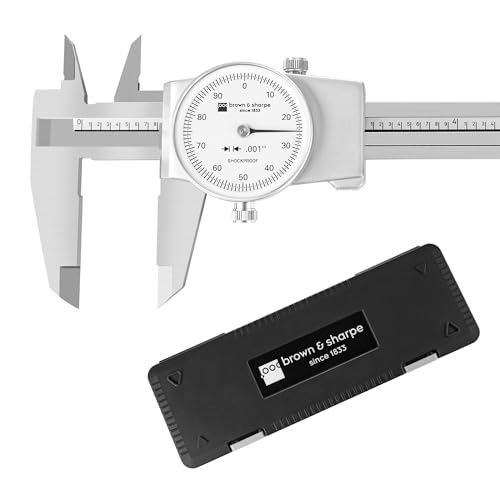
iGAGING 6-Inch 150 mm Dial Caliper
A 6 inch dial caliper with a dual reading scale in inch and metric. No battery, no screen to die mid-cut, and a mechanical needle that many machinists trust more in a dusty or oily shop.
Check price on AmazonChoose digital if you want the fastest, least error-prone readout and do not mind occasionally changing a battery. Choose dial if you want a tool that never depends on power and you are comfortable reading a rotating needle plus a sliding scale. Both hold similar resolution at this price point, so the decision comes down to how you prefer to read a measurement, not accuracy.
How do digital and dial calipers actually differ in use?
A digital caliper shows the measurement as a number on an LCD screen, and most models switch between inch, millimeter and fractional inch display with a button press. There is no interpretation step: you read the number and move on. A dial caliper shows the fractional part of an inch on a rotating dial while a separate scale on the beam shows the whole inch or centimeter count, so you add the two together to get a full reading.
That extra reading step on a dial caliper is a real skill, but a well-practiced machinist reads one just as fast as a digital screen. What a dial caliper never does is run out of battery or glitch from oil or coolant on the contacts, a genuine failure mode on cheap digital calipers.
| Factor | Digital | Dial |
|---|---|---|
| Readout | Numeric LCD, instant | Dial needle plus beam scale |
| Unit switching | Inch, mm, fraction on some models | Fixed per scale, dual scale models exist |
| Power needed | Yes, coin battery | No |
| Typical resolution | 0.0005 inch | 0.001 inch |
Which one is more accurate?
At this price tier, resolution is close enough that it rarely decides a real machining task. This digital model reads to 0.0005 inch while this dial model reads to 0.001 inch, both fine enough for hobby fits, hole spacing, and stock sizing. Genuine precision differences show up at the high end of either category, where better bearings, tighter jaw grinding and better internal mechanisms separate a 20 dollar tool from a 100 dollar one, not the digital versus dial choice itself.
For critical dimensions where a thousandth matters, most shops reach for a micrometer regardless of which caliper they own day to day. See caliper vs micrometer for when to make that switch.
What breaks first on each type?
Digital calipers fail most often from a dead or corroded battery contact, moisture getting behind the display, or a jammed encoder from metal chips packed into the rail. Keep the rail wiped clean and store the caliper with the battery cover snug and you avoid nearly all of these failures. Dial calipers fail most often from a bent or sticky rack and pinion gear if dropped or if grit gets into the mechanism, since the dial mechanism is entirely mechanical and has no electronics to fail but does have more moving parts to gum up.
Neither type likes being dropped. A caliper that reads inconsistently after a fall should be checked against a known-good gauge block or a machinist rule before you trust it again.
Which is better for a beginner learning to measure?
Digital is the friendlier choice for a true beginner because there is no reading skill to build, you read the number and record it. That said, learning to read a dial caliper builds a habit that pays off later when you pick up a dial indicator or a vernier scale on a micrometer, both of which use the same skill of combining a coarse scale and a fine scale into one reading.
If you are also learning to read decimal equivalents for drill sizes and fractional stock, keep the decimal equivalent chart open next to either caliper for the first few projects.
Does price actually buy better accuracy in either type?
Yes, but not in a straight line. A 15 dollar digital caliper and a 90 dollar digital caliper can both claim similar printed resolution, but the cheaper tool usually has looser jaw grinding, a stiffer or looser slide, and a less reliable encoder, all of which show up as inconsistent readings rather than a worse number on the display. The same holds for dial calipers, where a Starrett or Mitutoyo dial mechanism is built to tighter tolerances than a budget import, even when both display the same 0.001 inch graduation.
For hobby work, a mid-priced caliper of either type from a caliper-focused brand is usually the better buy than the cheapest option or an unnecessarily expensive one, since jaw grinding and slide fit matter more day to day than an extra digit of resolution you cannot reliably use anyway.
How should you store and maintain either caliper type?
Wipe the jaws and the beam or rail clean of oil, coolant and metal chips before closing the caliper and returning it to its case, since packed grit is the single biggest cause of premature wear on both types. Store the caliper closed but not clamped tight, in its case away from other tools that could nick the jaws, and check zero before each use rather than assuming it held from the last session.
For a digital caliper, remove the battery if it will sit unused for an extended stretch to avoid corrosion from a slow leak, and keep a spare battery on hand so a dead cell never stalls a project mid-measurement.
Shop the tools for this
An even spread across the price range, cheapest to premium.



Frequently asked questions
Do digital calipers lose accuracy over time?
A well-made digital caliper holds its accuracy for years if the rail stays clean and the battery is fresh, since the capacitive strip reading position does not physically wear the way a mechanical gear does. Accuracy problems in cheap digital calipers usually trace back to a dirty rail, a nearly dead battery, or a caliper that was dropped and knocked slightly out of alignment.
Is a dial caliper good enough for machining, or do I need digital?
A dial caliper is entirely good enough for machining and is what many professional machinists still prefer, since it needs no battery and the mechanical readout survives shop grime better than some display screens. The choice between the two is about workflow preference, not whether dial calipers are precise enough for real work.
What resolution caliper do I actually need for a home metal shop?
For most hobby machining, 0.001 inch resolution is plenty, since that is finer than most projects require and finer than you can reliably feel with your fingers when setting up a cut. Reach for a micrometer, not a finer caliper, on the rare dimension that truly needs a tenth of a thousandth.
Can I use a caliper to measure a hole diameter accurately?
Yes, using the smaller jaws on the back of the caliper body sized for internal measurement, though calipers measure less precisely on internal diameters than external ones because of how the jaws contact a curved bore. For a critical bore fit, confirm with a bore gauge or by checking the shaft that has to fit into it directly.
Do I need both a digital and a dial caliper?
Not for most home shops, one good caliper of either type covers nearly all hobby measuring needs. Some machinists keep a cheap dial caliper as a backup for dirty or coolant-heavy work and save a digital caliper for cleaner bench measuring, but that is a convenience choice, not a requirement.
Keep going
More comparisons
- 7x14 vs 8x16 mini lathe
- Carbide vs HSS lathe tools
- Caliper vs micrometer
- Dial indicator vs dial test indicator
- ER32 vs 5C collets
- Portable bandsaw vs 4x6 horizontal bandsaw
- Spiral point vs hand taps
- Cobalt vs titanium drill bits
Researched from published specifications, standards and verified owner reviews. Not professional advice. How we research.