The Garvee 15 inch variable speed floor drill press at $379.99 is the pick for metal, because its 288 to 3084 RPM range actually reaches down to the slow speeds larger drill bits need in steel, which most benchtop 5-speed presses cannot do.

Garvee 15 in Floor Drill Press
Wood-oriented drill presses are often sold on their top speed, but drilling metal cleanly is a low-speed problem: a half-inch bit in mild steel wants to run well under 1,000 RPM, and many budget 5-speed benchtop presses bottom out around 620 RPM, which is already too fast for larger bits and reamers. This Garvee floor press has a true variable speed motor starting at 288 RPM, a 0 to 45 degree tilting table, and enough weight and column length to stay rigid while drilling. Owner reviews on presses in this class consistently point out that the low end of the speed range, not the horsepower number, is what actually determines whether a bit walks, chatters, or cuts clean in steel.
Check price on AmazonThe three picks at a glance
| Tier | Pick | Price |
|---|---|---|
| Beginner | WEN 2.3-Amp 8-Inch 5-Speed Cast Iron Benchtop Drill Press | $123.76 |
| Intermediate | Garvee 15 in Floor Drill Press | $379.99 |
| Expert | JET 17-Inch Floor Drill Press | $1199.00 |
Beginner: Best first drill press
Who it is for: Someone drilling small to mid-size holes, up to about 3/8 inch, in mild steel and aluminum and wanting a real drill press instead of a handheld drill and a vise.
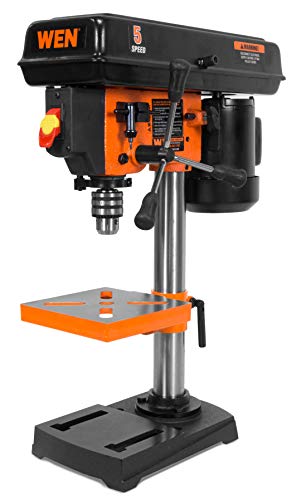
WEN 2.3-Amp 8-Inch 5-Speed Cast Iron Benchtop Drill Press
This WEN 8 inch 5-speed benchtop drill press is inexpensive, has a cast iron base for stability, and covers the speed range small bits need for metal. It is a genuine upgrade over handheld drilling for accuracy and repeatable depth.
Check price on AmazonSkip it if: Drilling bits larger than about 3/8 inch in steel; a 5-speed pulley press like this typically cannot get slow enough for larger bits without excessive chatter.
Intermediate: Buy once
Who it is for: A hobbyist drilling a full range of bit sizes in steel, including larger holes and counterbores, who wants one press that will not need replacing.
Garvee 15 in Floor Drill Press
Detailed above. True variable speed down to under 300 RPM covers the bit sizes a home metal shop actually drills, and the floor-standing design adds rigidity that benchtop presses give up for a smaller footprint.
Check price on AmazonSkip it if: A shop tight on floor space; this is a floor-standing press and needs a dedicated spot, unlike the benchtop options in this review.
Expert: Performance ceiling
Who it is for: A shop drilling metal often enough that quill runout and speed precision start to show up in hole quality and tool life.

JET 17-Inch Floor Drill Press
This JET 17 inch floor drill press uses a 16-speed step-pulley system, which gives finer control over spindle speed than a typical 5-speed or basic variable speed motor, plus the tighter quill tolerances and heavier castings JET is known for. It is the choice for a shop where hole quality and repeatability across many bit sizes actually matter to the work.
Check price on AmazonSkip it if: A hobby shop drilling a few holes per project; the price and size are built for a shop running the press often enough to notice the difference in quill runout.
Why does low-speed range matter more than top speed for drilling metal?
Cutting speed for a drill bit is set by the bit diameter and the material, and it does not change much whether the material is wood or steel; what changes is how forgiving each material is of the wrong speed. Steel punishes a bit run too fast with rapid dulling, burning, and chatter, and larger bits need noticeably slower spindle speeds than small ones to stay in the safe range. The RPM calculator on this site converts bit diameter and material into a target spindle speed, and running that number against a press spec sheet is the fastest way to see whether a given press can actually reach the speed a project needs.
Wood-focused drill presses are often speced with a high top speed and a 5-speed pulley system that stops well above the RPM larger metal bits want. A press advertised at "580 to 3200 RPM" or similar is doing real work for metal; one that only goes down to 620 RPM on its slowest setting is not.
| Bit size (steel) | Target RPM (approx) | Needs |
|---|---|---|
| 1/8 inch | 2,000 to 3,000 | Any 5-speed press |
| 3/8 inch | 700 to 1,000 | Most 5-speed presses |
| 1/2 inch | 500 to 750 | Variable speed or low pulley setting |
| 3/4 inch and up | 300 to 450 | True low-speed variable press |
5-speed pulley versus variable speed: which is worth the extra cost?
A 5-speed press changes speed by moving a belt between fixed pulley steps, which means only five discrete speeds are available, and the machine has to be stopped to change them. A variable speed press changes speed with a dial while the motor runs, covering the full range continuously, which matters most for anyone frequently switching between small and large bits in a single session.
For a shop drilling mostly one or two bit sizes, a 5-speed press set once to the right range is perfectly workable and cheaper. For a shop running a mix of bit sizes on the same day, variable speed pays for itself in time saved swapping belts.
What is quill runout and why does it matter for metal?
Quill runout is how much the spindle wobbles as it spins, measured with a dial indicator against the chuck or a test bar. High runout shows up as oversize holes, a bit that wanders when starting a hole, and shortened bit life from uneven cutting load on the flutes. Budget presses rarely publish a runout spec, which is itself informative; premium presses that do publish one are signaling a tighter manufacturing tolerance that shows up directly in hole accuracy.
Benchtop or floor-standing: which fits a home shop?
A benchtop press sits on a workbench and needs less floor space, which suits a shop tight on room or one that shares bench space with other tools. A floor-standing press has a longer column, often more travel, and generally more mass, which adds rigidity that helps with larger bits and heavier feed pressure in steel. Either type can drill metal well within its speed range; the choice mostly comes down to available space and how large the bits and stock get.
Also worth considering
- VEVOR Benchtop Drill Press ($127.71): VEVOR 3.2 amp 5-speed benchtop press: a slightly higher-power benchtop alternative to the WEN at a similar price.
- WEN 12-Inch Benchtop Drill Press ($313.99): WEN 12 inch variable speed benchtop press: true variable speed without needing floor space, if bench room is available.
- JET 12-Inch Benchtop Drill Press ($599.99): JET 12 inch benchtop variable speed press: JET build quality at benchtop size, a step below the 17 inch floor model.
- BUCKTOOL 12-Inch Benchtop Drill Press ($301.29): Bucktool 12 inch benchtop press, 580 to 3200 RPM: a budget variable speed option between the 5-speed and Garvee tiers.
More options across the price range
Chosen as an even spread from the cheapest to the most expensive listing in this category.


How we chose
Picks here come from comparing published speed ranges, horsepower, table size, and quill travel against Amazon listing details and verified owner reviews, not from drilling metal with any of these presses directly. Presses whose reviews repeatedly mention chuck runout, belt slip, or a table that will not stay locked at an angle were passed over regardless of price.
The emphasis on low-speed range over top speed reflects how drill press specs actually translate to metal work: a press that cannot get slow enough for larger bits will struggle no matter how many amps the motor draws.
Buying tips
What horsepower is enough for drilling metal at home?
For bits up to about 3/4 inch in mild steel, a 1/3 to 3/4 HP motor is enough as long as the speed is set correctly for the bit. More horsepower helps most with feed rate on larger holes, not with whether the press can cut at all.
Does table size matter for drilling metal parts?
A larger table gives more room to clamp a part securely, which matters more for metal than for wood since a metal part can spin violently if it catches rather than splitting like wood does. Always clamp the workpiece; never hold metal by hand while drilling.
Is a laser guide or work light worth having?
Both are minor conveniences for lining up a punch mark, not substitutes for a proper center punch and careful setup. They are a nice-to-have on an otherwise good press, not a reason to choose one press over another.
Should I buy a keyless or keyed chuck for a metal-drilling press?
A keyed chuck generally grips a bit more securely under the higher torque metal drilling can demand, which is why most metal-focused presses ship with one. Keyless chucks are more convenient but worth checking reviews for grip strength before relying on one for larger bits.
Get these picks by email
Every item on this page with its current price in one email, so you can buy the shop in stages. No sales sequence.
Used only to send the list.Frequently asked questions
What RPM should a drill press run for drilling steel?
It depends on bit diameter: small bits under 1/4 inch run well over 2,000 RPM, while bits over 1/2 inch need to slow down to 500 RPM or less to avoid burning the bit and work-hardening the hole surface. The RPM calculator on this site converts bit size and material directly into a target speed.
Why does my drill press burn or dull bits quickly in steel?
The most common cause is running too fast for the bit size, which generates heat faster than it can dissipate and takes the temper out of the cutting edge. The fix is almost always to slow down and add cutting fluid, not to buy a harder bit.
Is a benchtop drill press strong enough for metal?
Yes, for bit sizes within its rated capacity and speed range. Benchtop presses drill metal cleanly as long as the speed is set correctly and the part is clamped securely; the limitation is usually low-end speed range and table rigidity for larger bits, not the tool being fundamentally unsuited to metal.
What is the difference between drill press horsepower and torque for metal work?
Horsepower describes overall power output, while torque, especially at low RPM, determines whether the bit keeps cutting under load without stalling. A press with a good low-speed torque curve can drill a large hole in steel at slow RPM without bogging down, which matters more for metal than a high top speed does.
How much quill runout is acceptable for a home shop drill press?
A few thousandths of an inch is typical for budget presses and rarely causes visible problems in hobby work. Runout becomes worth chasing down, or upgrading the press to fix, once holes are noticeably oversize or a bit consistently wanders when starting a cut in the same spot.
Keep going
Researched from published manufacturer specifications, listing details and verified owner reviews. Not hands-on testing and not professional advice. How we research.