Start 6061-T6 aluminum at 800 SFM with a carbide turning insert: about 3,056 RPM on 1 inch stock. Rough at 0.0100 in/rev and about 0.05 inch depth of cut, finish at 0.004 in/rev and 0.005 inch.
What RPM and feed for 6061-T6 aluminum?
| Work diameter | Ideal RPM | RPM on a 2500 RPM mini lathe |
|---|---|---|
| 0.25" | 12,223 | 2,500 |
| 0.5" | 6,112 | 2,500 |
| 0.75" | 4,074 | 2,500 |
| 1" | 3,056 | 2,500 |
| 1.5" | 2,037 | 2,037 |
| 2" | 1,528 | 1,528 |
| 3" | 1,019 | 1,019 |
| 4" | 764 | 764 |
Feed: roughing about 0.0100 in/rev at 0.05 inch depth of cut; finishing about 0.004 in/rev at 0.005 inch. On a 7x mini lathe the power feed rates are fixed by the change gears, so pick the nearest.
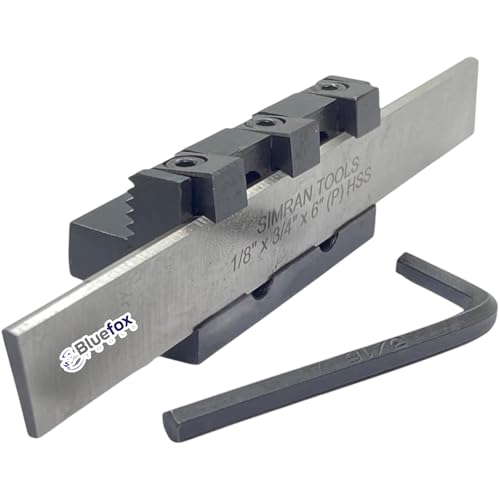
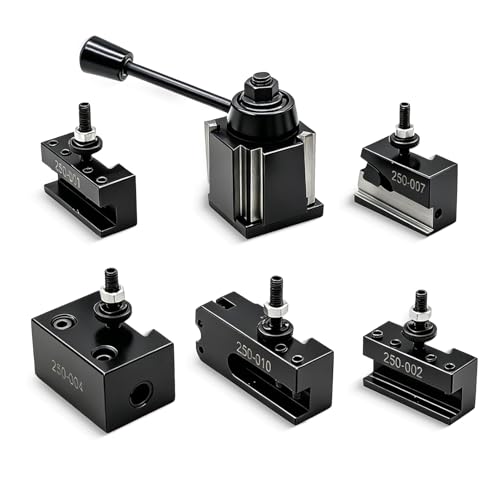
Tools for cutting 6061-T6 aluminum




How does 6061-T6 aluminum machine?
6061-T6 is the default hobby aluminum: cheap, stable and forgiving. The danger is not heat but chips welding to the cutting edge, so keep edges sharp and polished, use a sharp 2 or 3 flute cutter, and clear chips with air or a light oil or WD-40 style lubricant.
Why a carbide turning insert?
Carbide inserts need surface speed and a real depth of cut to work as designed. On a mini lathe, choose sharp, positive, ground inserts (CCGT or DCGT style for non-ferrous, CCMT for steel) rather than the heavy-chipbreaker inserts built for industrial machines.
Adjust speeds with the RPM calculator and milling feeds with the feed rate calculator. The cutting speed chart compares every material.
Frequently asked questions
What SFM for 6061-T6 aluminum?
A starting surface speed of 250 SFM with HSS and 800 SFM with carbide, and 200 SFM for HSS drills. These are conservative for hobby machines; raise them in steps if the chips come off clean and the tool stays cool. 6061-T6 aluminum rates excellent for machinability.
What happens if my machine cannot reach the RPM?
Run at your top speed. Running below the ideal surface speed only makes the job slower; it does not damage the tool. For milling and drilling, keep the chip load per tooth or feed per revolution the same so the edge keeps cutting instead of rubbing, which lowers the feed in inches per minute in proportion.
Other tools in 6061-T6 aluminum
Other materials with a carbide insert
- 7075-T6 aluminum
- 360 free-machining brass
- 932 bearing bronze
- 110 copper
- 12L14 leaded steel
- 1018 cold rolled steel
- 1045 medium carbon steel
- 4140 alloy steel (annealed)
- All